Welcome To Lyme Bytes!
Greetings and welcome to my Lyme disease blog, a comfy cozy (and sometimes crazy!) place for cutting-edge information, encouragement and insight into the fastest-growing epidemic disease in the United States. In this blog you will find everything from bug-killing strategies to immune system and hormone help, as well as lifestyle and spiritual suggestions for healing from chronic illness involving Lyme disease. The information contained within this blog is based upon my own healing journey and what I have learned over the past six years as I have been diligently digging and researching my way back to a better state of health. May you find it to be a source of hope, inspiration and wisdom in your own journey towards wellness.
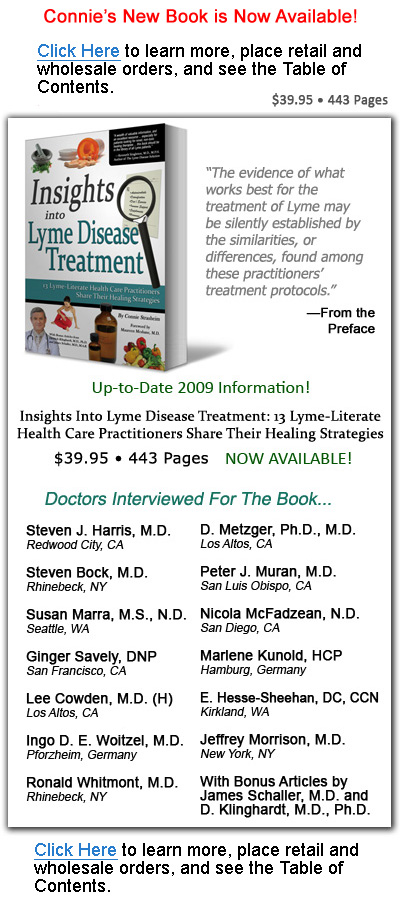
Learn More About The Thirteen Doctors Who Participated In My New Lyme Book!:
About the book:
443 Pages - $39.95
Published August, 2009
Written by Connie Strasheim
Learn More - Bulk Orders - Table of Contents
Thirteen Lyme-literate health care practitioners reveal their treatment strategies for chronic Lyme disease in new book.
Denver, Colorado—August, 2009. A new book, Insights Into Lyme Disease Treatment: Thirteen Lyme-Literate Health Care Practitioners Share Their Healing Strategies, provides people with Lyme disease and their physicians with current, cutting-edge information on the treatment of chronic Lyme disease and the corollary conditions that it causes.
It is a comprehensive resource, written from the perspective of thirteen Lyme disease experts, including eight Lyme-literate medical doctors (MD’s), two naturopathic doctors (ND’s), a “heilpraktiker” (or healing practitioner, as the German title translates into English) and one chiropractor and nutritionist. The training and education of the experts encompasses a broad range of disciplines, but most use a combination of allopathic, naturopathic, complementary and alternative medicine in their practices. Whatever their background, however, all are experienced in treating chronic Lyme disease.
The book includes each practitioner’s anti-microbial and detoxification protocols, as well as their recommended supportive treatments for the body. It also provides their perspectives on the challenges and roadblocks to healing.
According to the CDC, Centers for Disease Control and Prevention, Lyme disease is the fastest-growing infectious disease in the US, with more than 20,000 new cases reported each year. The CDC estimates, however, that only one in ten cases is reported, which means that there could be at least 200,000 new cases each year, and perhaps even many more than that.
Lyme disease can be treated successfully with antibiotics when - and if - it is caught early, while the Lyme spirochetes are still in the patient’s bloodstream and can be reached by antibiotics. If the disease goes undiagnosed, the spirochetes, (which are related to those that cause syphilis), can infiltrate the non-blood areas of the body, such as the nervous system, brain, heart, joints, and cartilage. The disease then becomes a multi-symptom, multi-system illness that wreaks havoc upon nearly all of the patient’s tissues and organs.
Once this happens, Lyme disease becomes chronic and difficult to diagnose. It may masquerade as a variety of other illnesses. Many physicians do not know how to effectively treat it. It devastates nearly every aspect of a person’s existence. ILADS, the International Lyme and Associated Diseases Society, estimates that most chronic Lyme disease sufferers experience a level of disability equivalent to that of a person who has suffered from a recent heart attack. As chronicled in the recently released documentary, "Under Our Skin: There's No Medicine For Someone Like You," those with chronic Lyme experience so much neurological and cognitive dysfunction that they end up losing their jobs, homes, mobility, and, in some cases, their lives.
For those who have been recently diagnosed with Lyme disease or who haven’t received adequate treatment help through the means that have been available to them, Insights Into Lyme Disease Treatment provides a comprehensive variety of effective, in-depth solutions. For the practitioner, it provides cutting-edge information on treatments that has not been published elsewhere.
The information in this book was obtained through interviews with the following thirteen health care practitioners:
Steve Harris, MD
Steven Bock, MD
Susan Marra, ND, MS
Ginger Savely, DNP
Lee Cowden, MD, MD (H)
Ingo Woitzel, MD
Ronald Whitmont, MD
Deborah Metzger, MD, PhD
Pete Muran, MD, MBA
Nicola McFadzean, ND
Marlene Kunold, “Heilpraktiker” (Healing Practitioner, Germany)
Elizabeth Hesse-Sheehan, DC, CCN
Jeffrey Morrison, MD
These practitioners were chosen on the basis of their expertise and experience in treating chronic Lyme disease. After the interviews, Ms. Strasheim wrote the book’s chapters, collaborating with the practitioners in the editing process, to make sure that all of the information from the interviews was accurately represented. Each chapter is devoted to the treatment approach of a particular practitioner, and covers, to a greater or lesser degree, the following:
1) Anti-microbial treatments for Lyme disease and associated infections, including antibiotics, herbs, homeopathic remedies, plant stem cells and biophotons
2) Information on how to support the body’s systems, which is an integral component to healing from chronic Lyme disease. Particular attention is given to the immune, endocrine, neurological, digestive and musculoskeletal systems
3) Treatments for symptomatic relief. Solutions for fatigue, pain, brain fog, depression, anxiety and insomnia are offered, as well as others
4) Detoxifying Lyme biotoxins, mold, candida, heavy metals and other environmental toxins
5) Treating food and environmental allergies
6) Lifestyle and dietary recommendations for faster healing
7) Strategies for healing emotional trauma
8) Patient and practitioner challenges to healing
9) Factors that influence healing
10) Suggestions for how family and friends can help the sick
11) Which anti-microbial treatments work and which don’t
12) How to discern whether Lyme disease is primary in patients’ overall symptom picture
The Author
Insights Into Lyme Disease was written by Connie Strasheim, a Lyme disease sufferer and health care researcher. She is the author of The Lyme Disease Survival Guide: Physical, Lifestyle and Emotional Strategies for Healing, a book that describes Lyme disease treatment strategies, as well as practical solutions for coping with the difficulties of chronic illness. Ms. Strasheim wrote Insights Into Lyme Disease Treatment when she realized that more information on how to treat chronic Lyme was sorely needed from the experts who treat Lyme patients. Prior to becoming ill from chronic Lyme disease, Ms. Strasheim worked as a Spanish instructor, medical interpreter and flight attendant. Ms. Strasheim lives in Denver, Colorado and is available for phone, on-line, and in-person interviews.
Availability
The book will retail for USD $39.95 and will be available via Ms. Strasheim’s blog at: http://www.lymebytes.blogspot.com and online book retailers in early to mid-September, 2009. It is published by BioMed Publishing Group.
Published August, 2009
Written by Connie Strasheim
Learn More - Bulk Orders - Table of Contents
Thirteen Lyme-literate health care practitioners reveal their treatment strategies for chronic Lyme disease in new book.
Denver, Colorado—August, 2009. A new book, Insights Into Lyme Disease Treatment: Thirteen Lyme-Literate Health Care Practitioners Share Their Healing Strategies, provides people with Lyme disease and their physicians with current, cutting-edge information on the treatment of chronic Lyme disease and the corollary conditions that it causes.
It is a comprehensive resource, written from the perspective of thirteen Lyme disease experts, including eight Lyme-literate medical doctors (MD’s), two naturopathic doctors (ND’s), a “heilpraktiker” (or healing practitioner, as the German title translates into English) and one chiropractor and nutritionist. The training and education of the experts encompasses a broad range of disciplines, but most use a combination of allopathic, naturopathic, complementary and alternative medicine in their practices. Whatever their background, however, all are experienced in treating chronic Lyme disease.
The book includes each practitioner’s anti-microbial and detoxification protocols, as well as their recommended supportive treatments for the body. It also provides their perspectives on the challenges and roadblocks to healing.
According to the CDC, Centers for Disease Control and Prevention, Lyme disease is the fastest-growing infectious disease in the US, with more than 20,000 new cases reported each year. The CDC estimates, however, that only one in ten cases is reported, which means that there could be at least 200,000 new cases each year, and perhaps even many more than that.
Lyme disease can be treated successfully with antibiotics when - and if - it is caught early, while the Lyme spirochetes are still in the patient’s bloodstream and can be reached by antibiotics. If the disease goes undiagnosed, the spirochetes, (which are related to those that cause syphilis), can infiltrate the non-blood areas of the body, such as the nervous system, brain, heart, joints, and cartilage. The disease then becomes a multi-symptom, multi-system illness that wreaks havoc upon nearly all of the patient’s tissues and organs.
Once this happens, Lyme disease becomes chronic and difficult to diagnose. It may masquerade as a variety of other illnesses. Many physicians do not know how to effectively treat it. It devastates nearly every aspect of a person’s existence. ILADS, the International Lyme and Associated Diseases Society, estimates that most chronic Lyme disease sufferers experience a level of disability equivalent to that of a person who has suffered from a recent heart attack. As chronicled in the recently released documentary, "Under Our Skin: There's No Medicine For Someone Like You," those with chronic Lyme experience so much neurological and cognitive dysfunction that they end up losing their jobs, homes, mobility, and, in some cases, their lives.
For those who have been recently diagnosed with Lyme disease or who haven’t received adequate treatment help through the means that have been available to them, Insights Into Lyme Disease Treatment provides a comprehensive variety of effective, in-depth solutions. For the practitioner, it provides cutting-edge information on treatments that has not been published elsewhere.
The information in this book was obtained through interviews with the following thirteen health care practitioners:
Steve Harris, MD
Steven Bock, MD
Susan Marra, ND, MS
Ginger Savely, DNP
Lee Cowden, MD, MD (H)
Ingo Woitzel, MD
Ronald Whitmont, MD
Deborah Metzger, MD, PhD
Pete Muran, MD, MBA
Nicola McFadzean, ND
Marlene Kunold, “Heilpraktiker” (Healing Practitioner, Germany)
Elizabeth Hesse-Sheehan, DC, CCN
Jeffrey Morrison, MD
These practitioners were chosen on the basis of their expertise and experience in treating chronic Lyme disease. After the interviews, Ms. Strasheim wrote the book’s chapters, collaborating with the practitioners in the editing process, to make sure that all of the information from the interviews was accurately represented. Each chapter is devoted to the treatment approach of a particular practitioner, and covers, to a greater or lesser degree, the following:
1) Anti-microbial treatments for Lyme disease and associated infections, including antibiotics, herbs, homeopathic remedies, plant stem cells and biophotons
2) Information on how to support the body’s systems, which is an integral component to healing from chronic Lyme disease. Particular attention is given to the immune, endocrine, neurological, digestive and musculoskeletal systems
3) Treatments for symptomatic relief. Solutions for fatigue, pain, brain fog, depression, anxiety and insomnia are offered, as well as others
4) Detoxifying Lyme biotoxins, mold, candida, heavy metals and other environmental toxins
5) Treating food and environmental allergies
6) Lifestyle and dietary recommendations for faster healing
7) Strategies for healing emotional trauma
8) Patient and practitioner challenges to healing
9) Factors that influence healing
10) Suggestions for how family and friends can help the sick
11) Which anti-microbial treatments work and which don’t
12) How to discern whether Lyme disease is primary in patients’ overall symptom picture
The Author
Insights Into Lyme Disease was written by Connie Strasheim, a Lyme disease sufferer and health care researcher. She is the author of The Lyme Disease Survival Guide: Physical, Lifestyle and Emotional Strategies for Healing, a book that describes Lyme disease treatment strategies, as well as practical solutions for coping with the difficulties of chronic illness. Ms. Strasheim wrote Insights Into Lyme Disease Treatment when she realized that more information on how to treat chronic Lyme was sorely needed from the experts who treat Lyme patients. Prior to becoming ill from chronic Lyme disease, Ms. Strasheim worked as a Spanish instructor, medical interpreter and flight attendant. Ms. Strasheim lives in Denver, Colorado and is available for phone, on-line, and in-person interviews.
Availability
The book will retail for USD $39.95 and will be available via Ms. Strasheim’s blog at: http://www.lymebytes.blogspot.com and online book retailers in early to mid-September, 2009. It is published by BioMed Publishing Group.
Monday, March 26, 2012
New Book, "Defeat Cancer" now FREE on Amazon!
Hello Friends! Just a quick announcement for those of you interested in the topic of cancer- For a limited time only, my recently-released book, "Defeat Cancer: 15 Doctors of Integrative and Naturopathic Medicine Tell You How," is available for FREE on Kindle, for Prime members on Amazon who have kindle devices.
Click on the link for more information:
http://www.amazon.com/Defeat-Cancer-Integrative-Naturopathic-ebook/dp/B007NUYQHI/ref=tmm_kin_title_0?ie=UTF8&m=AG56TWVU5XWC2
The hard copy book normally sells for 39.95, so this is a great value for those who download their books on Kindle. Please pass this announcement on to anyone whom you think would benefit from learning about cutting-edge cancer treatments from some of the best doctors in the world.
Click on the link for more information:
http://www.amazon.com/Defeat-Cancer-Integrative-Naturopathic-ebook/dp/B007NUYQHI/ref=tmm_kin_title_0?ie=UTF8&m=AG56TWVU5XWC2
The hard copy book normally sells for 39.95, so this is a great value for those who download their books on Kindle. Please pass this announcement on to anyone whom you think would benefit from learning about cutting-edge cancer treatments from some of the best doctors in the world.
Friday, September 30, 2011
My New Blog, "God In The Wilderness"
Hello Everyone! For those who appreciate my spiritual posts, from now on, I will be blogging about spirituality and God separately on a new site, entitled, "God in The Wilderness," which can be accessed here: http://godinthewilderness.blogspot.com. I invite you to check it out! In the meantime, I will still post here from time to time on what I learn about treatments for chronic illness involving Lyme disease. Thanks!
Wednesday, September 14, 2011
Bartonella and Babesia Symptom Checklists, According To James Schaller, MD, MAR
James Schaller, MD, MAR, has spent many years researching and treating Bartonella and Babesia, two important tick-borne infections implicated in chronic Lyme disease. He is a prolific writer who has published several books on these infections, as well as on other topics relating to chronic illness and tick-borne infections. Below I share with you Dr. Schaller's recently-compiled symptom checklists for Babesia and Bartonella, which most often cannot be adequately diagnosed via lab tests. Bear in mind, symptoms for different infections often overlap, which is why having an exhaustive list of symptoms for each infection may help to sort out which infections are predominant in a person's symptom picture. For example, fatigue and headaches are symptoms of a myriad of diseases, but if ten or twenty other symptoms in the body point to Babesia, it may be that this is the predominant cause of a person's fatigue and headaches.
(Note: All information has been re-copied directly from Dr. Schaller's documents, by permission, and has not been modified for any reason).
The Bartonella Checklist
Increasing Suspicion of This Emerging Stealth Infection
1. Insomnia [If profound fatigue this might not apply].
2. Current anxiety that was not present at age ten.
3. Current anxiety or depression not present at twenty years old.
4. Knee-jerk emotional responses worse than past decades and worsening.
5. Unusual discomfort on the soles of your feet
6. A temperature under 98.3 in a sick person. A temperature under 99.0 if Lyme disease or Babesia is present
7. Puffy tissue on insole or any part of ankles
8. Depression
9. Depression that is not fully controlled. [Improvement of mood is not successful in depression treatment].
10. Gingivitis or bleeding during flossing
11. Anxiety is poorly controlled with average dosing
12. Depression is poorly controlled by reasonable medication trials
13. Sleep medicines work poorly at routine dosing
14. Rage worse with time
15. Irritability worse with time
16. IL-6 is very low
17. IL-1B is very low
18. TNF-a is in lower 10% of normal range
19. Any skin markings or growths greater than most people
20. Blood vessels or color on skin greater than most people
21. Impatience > in personality when compared to ten years ago. [in a child, any can be any irritability]
22. Cursing or hostile speech that is worse over time.
23. One or more medical problems with unclear cause(s) and “idiopathic.”
24. Red papules of any size.
25. Skin tags including ones removed by dermatologist or shaved off.
26. Unusual blood vessels of any kind including inside organs such as bladder or intestinal walls
27. Any skin finding in excess of 95% of most humans
28. Skin findings showing increased blood vessels of any size
29. Skin findings showing increased tissue formation that is increased over the flatness of surface skin.
30. Skin showing blood vessels that are too large or too many for the location of the blood vessels, e.g., surface thigh and calf skin with very thick surface blood vessels. Or legs, upper arms or shoulders have explosions of many fine blood vessels.
31. Increased addictions that are more resistant to recovery than average.
32. Increased impulsivity in contrast to past years or past decades.
33. Burning skin sensations [this may have many causes].
34. Itching without a clear cause and which is hard to control and remove
35. Skin erosion without a clear cause such as a fire or chemical burn.
36. Minor cuts or scratches which heal slowly.
37. After a surgery, you heal very slowly.
38. You have two tick or flea infections with two positive tick or flea borne viruses, bacteria or protozoa. [Bartonella has >30 published species in public genetic databases and has more vectors than possibly any infection in the world. Therefore, the presence of other infections such as tick borne viruses, bacteria or protozoa, should raise suspicion.
39. Exposure to cats and dogs in excess of very incidental rare contact.
40. The patient’s mother is suspicious for Bartonella based on newer direct and indirect testing.
41. A sibling, father, spouse of child with any tick or flea-borne infection who shared a residence or vacation with proximity to brush.
42. Exposure to outdoor environments with brush, wild grasses, wild streams, golf courses or woods.
43. Outdoor expose in locations such as brush, wild grasses, wild streams or woods which happened without the use of DEET or without very high off- gassing essential oils on exposed skin areas.
44. The outdoor exposures such as brush, wild grasses, wild streams or woods which occurred without permethrin on shoes, socks and all clothing.
45. Clear exposure to lice, fleas or ticks. [Bartonella is carried by a huge number of carriers, but for now, the % that carry Bartonella is not known. Further, the capacity to detect all new species in the vectors or in humans infected, does not exist or is not routinely available in direct testing of all human infectious Bartonella organisms in both large or specialty labs].
46. Stretch marks in eccentric locations, e.g., arms, upper side under armpit, around armpit or on the back.
47. Stretch marks filled with red, pink, purple or dark blue color.
Certainty claims or criticism about Bartonella positions without reading at least parts of 1,000's of articles is confusing. How is this possible with new Bartonella findings and understandings each month? There are also new species genetically sequenced to show uniqueness almost every month in public databases. In this spirit, this scale is meant to merely increase suspicion of Bartonella, which is a super stealth infection that takes perhaps fifty days to grow out on some bacteria growth plates, and floats in the blood as it lowers fevers. It also clearly suppresses some key immune system fighting chemicals. Cure claims are made without the use of indirect testing markedly documented in superior journals, but which are not used by immensely busy clinicians working full-time.
Dr. Schaller is the author of 29 books and 27 top journal articles. His publications address issues in at least twelve fields of medicine. He has the most recent textbooks on Bartonella. He has published on Bartonella under the supervision of the former editor of the Journal of the American Medical Association (JAMA), and his entries on multiple tick and flea borne infections, including Bartonella [along with Babesia and Lyme disease] were published in a respected infection textbook endorsed by the NIH Director of Infectious Disease. He has approximately six texts on tick and flea-borne infections based on his markedly unique full-time reading and study practice, which is not limited to either finite traditional or integrative progressive medicine. Since he has a medical license he has been able to sort through many truth claims by ordering lab testing. He does not follow truth claims without indirect testing laboratory proof. He has read full-time on these emerging problems for many years.
C COPYRIGHTED 2011 JAMES SCHALLER, MD version 11.
This form cannot be altered if it is printed or posted in any manner without written permission. Posting in a critical negative evaluation is forbidden. Printing to assist in diagnostic reflections is encouraged, as long as no line is redacted or altered including these final paragraphs. Dr. Schaller does not claim this is a flawless or final form, and defers all diagnostic decisions to your licensed health professional.
The Babesia Checklist
Improving Detection of A Common Emerging Stealth Infection
Below are examples of signs, symptoms and indirect ways to help increase the diagnosis of Babesia. An examination of public genetic databases shows well over thirty-five species exist, many of which have variants.
Please note that an unknown percentage of people infected have no symptoms, at least for many years.
This checklist is not meant to be used as a definitive tool to diagnose Babesia. I would suggest that no definitive 100% or even 98% sensitive tool exists.
My goal is merely to decrease illness resulting from false negative patients, i.e., people who are positive but do not show up positive on a basic direct test.
Indeed, it is not uncommon for a patient with Babesia to present with a negative test result over ten times, regardless of the lab, and then to show up positive on DNA testing when exposed to two or three protozoa treatments for three days, or to have positive antibody testing six weeks after a similar provocation trial.
I do not oppose or endorse such approaches, but feel it necessary to mention that this has happened with “malaria” prevention treatment. Additionally, there have been instances in which the use of herbs, such as artesunate, for cancer prevention, has resulted in an unintended outcome: the conversion of a Babesia titer from negative to positive.
The path to expertise with Babesia is not simply to read a summary article or guidebook (of which I have authored four on the topic). Nor is expertise acquired by viewing the sickest 1% of patients as the “norm” in Babesia diagnosis.
If someone seeks expert knowledge of the infection, it begins by reading the entire world Pub Med literature over a few years, then utilizing that knowledge by focusing on treating this infection for over five years.
In summary, how can any certain Babesia position exist, when new species that infect humans are routinely emerging, and for which there is not even a direct test—regardless of sensitivity?
Please circle (consider) any symptom that applies:
1) I react to any derivative of Artemisia (Sweet Wormwood). *Note: the reaction does not need to last more than a day and any immediate stomachaches or loose stool do not apply.
2) I react to a malaria drug. (It requires profound wisdom for a clinician to distinguish between a side effect and a reaction caused by an effective Babesia treatment. For example, insomnia caused by the synthetic drug Larium is meaningless, since Larium has this as a side effect in uninfected patients. But fatigue and a severe headache resulting from a teaspoon of Mepron on day one are very suspicious symptoms for a known protozoan like Babesia or Malaria or other similar infections that are newly identified genetically).
3) Headaches with no clear cause
4) Headaches that are hard to control
5) Weight gain in clear excess of diet and exercise
6) Weight loss with reasonable eating and average exercise
7) Fatigue in excess of that experienced by most people in the same age range
8) Fatigue that produces need for sleep in excess of 8 ½ hours daily
9) Fatigue with ongoing insomnia [consider the possibility of both Bartonella and Babesia in this case]
10) Absolute Eosinophils in the low or high range [this is not definitive in any manner, but is a useful tool]
11) A percentage of Eosinophils in low range or high normal range
12) Very high Eosinophils [rare with Babesia, but other findings suggest other possible causes]
13) Mood changes with any herb or drug that kills protozoa like Babesia, with the exception of Larium
14) Shortness of breath [no clear asthma, pneumonia, COPD or other common cause]
15) Swelling in limbs and other parts of body
16) Night sweats
17) Excessive perspiration during normal daily activity
18) Hot flashes in a normal temperature room
19) A poor appetite
20) Intermittent fever
21) Chills
22) A high fever
23) A high fever in excess of three days
24) Slowed thinking
25) Listlessness
26) A normal or low VEGF lab result in the presence of Bartonella
27) A TNF-a in excess of 1.0 in the presence of Bartonella
28) A CD57 or CD57/8 level that drops right after the start of a Babesia treatment, or which falls steadily with ongoing treatment
29) Pets, farm animals or local relatives with ANY tick borne virus, bacteria or protozoa
30) Excess breast tissue in a man or boy
31) Any decreased in appetite
32) Severe chest wall pains
33) Random stabbing pains
34) Any enhanced sense: sensitivity to light, touch, smells or sound
35) Family, friends or others report you look tired or foggy
36) You have received blood from another person
37) Muscle aches or joint aches/pain, especially worse after use of a protozoa killing medicine such as proquanil, Alinia, ativoquone, clindamycin, or one of many new emerging progressive natural medicine or synthetic malaria drug treatments
38) Nausea or vomiting
39) Hemolytic anemia with lab positive blood products in your urine [this is not a routine finding]
40) Dark urine [this is rarer than some articles intimate]
41) An enlarged liver (which sits under your right rib cage)
42) An enlarged spleen (under your left rib cage). This is falsely believed to be a common human sign; actually it is very rare.
43) A yellow hue on eyes, hands and skin (jaundice) with no other clear cause.
44) Sexual contact is a debated form of communication of some tick and flea borne infections. I have no position. Isolation in a body fluid does not mean that is a route to spread the infection. If you and your healer feel this is a possible route of infection, has the patient had intimate contact with the sharing of body fluids with an infected person?
45) The patient’s mother is suspected of having or has been diagnosed with Babesia, Ehrlichia, Rocky Mountain Spotted Fever, Anaplasma, Lyme or Bartonella based on newer direct and indirect testing or clinical signs and symptoms.
46) A sibling, father, spouse or child with any tick borne infection who shared a residence or vacation with proximity to brush (wooded area).
47) Exposure to outdoor environments with brush, wild grasses, wild streams, golf courses or woods in excess of ten minutes in any location lived or visited since the age of eighteen months of age.
48) Outdoor exposure in locations such as brush, wild grasses, wild streams or woods which took place without the use of DEET or without very high off-gassing essential oils on exposed skin areas.
49) Enlarged lymph nodes (but also in Lyme, Bartonella, other infections, high inflammation, tumors and other diseases)
50) After Babesia treatment with clear protozoa killing agents used also to kill malaria, IL-6 moves from very low to an increased level.
51) After Babesia treatment with clear protozoa killing agents used also to kill malaria, IL-1B moves from very low to an increased level.
52) Brain troubles such as trouble keeping up with past routine life demands, lateness due to trouble with motivation and organization, and trouble with concentration [Any of these would be a positive]
53) Memory troubles [this is not specific to one infection or one disease process. For example, exposure to indoor mold’s biological chemicals can decrease memory within an hour depending on the species mix]
54) Profound psychiatric illnesses [this is not limited to a single infection]
55) Daytime sleep urgency despite nighttime sleep
56) Waves of generalized itching [this infection and inflammation sign is not limited just to Babesia].
57) Spike of a fever over 100.5 after a possible tick bite.
58) Insomnia after taking a malaria killing herb or drug
59) Anxiety and/or depression after taking a malaria killing herb or drug
60) Rage or temporary personality regression right after use of a malaria killing herb or medication
61) Excess fat in lower belly area that is in excess of lifestyle and activity.
62) Lumps or other types of tissue collection with no clear cause [Other tick and flea-borne infections can also cause these growths]
63) One or more medical problems with unclear cause(s), with changing or contradictory diagnoses, or which are eventually called “idiopathic.”
64) Psychiatric label(s) given for all of your troubles or a child or relative’s troubles when clear medical problems exist as shown by abnormal laboratory results (only if wide testing is done which includes inflammation and anti-inflammation chemicals, hormones, nutrient levels, and other immune system chemicals).
65) You have two tick or flea infections with two positive tick or flea borne viruses, bacteria or protozoa. The presence of other infections such as tick borne viruses or bacteria raises suspicion of a Babesia infection.
66) Your clinician understands the use of indirect testing and feels your lab pattern is suggestive of the presence of Babesia. This involves more than an ECP spike.
67) Since direct testing for Babesia by any lab misses many human species and is of variable reliability, and the common presence of Bartonella suppresses some antibody tests, a positive or “indeterminate” is likely a positive. Have you had an “indeterminate” or “borderline” Babesia result?
68) You have neighbors living near you with a tick or flea infection diagnosis.
69) Your pet(s) or family animals of any type, e.g., horses, have had outdoor exposures to areas such as brush, wild grasses, wild streams or woods. If the pets were animals such as dogs, which can be given anti-tick and flea treatments, were these animals always on schedule with these treatments?
70) Have you had clear exposure to ticks in your current or past homes as an adult?
71) Have you had clear exposure to ticks during vacations or other travels?
A WORD ON MANUAL BLOOD EXAMINATIONS
No blood smear will be positive for Babesia unless you have a profoundly massive number of infected red blood cells, which is rare. Therefore, no blood smear should be considered negative unless it has been examined for thirty minutes. While a 2-3 minute exam of large white blood cells may be fully sufficient to identify cancers and other diseases, a search for over eighty Babesia red blood cell presentations under 1000x, as found in my Hematology Forms of Babesia book, requires at least thirty minutes, which requires private contracting with a microbiologist or pathologist or a favor from a lab director. Please appreciate that stains help define whether a substance is what it appears to be.
Babesia is an emerging infection. Any certainty claims or criticism about Babesia positions without reading at least parts of 1,500 articles is a premature certainty. Again, new Babesia species are emerging every one to four months. Indeed, even a new protozoan has been found that looks like Babesia under a high powered microscope. But when it is genetically sequenced it is not Babesia or immature malaria, which can look similar. It is a new infection.
Therefore, since this is a new emerging illness, this scale is meant to merely increase awareness of Babesia, an infection that can kill patients of any age. Writings in the past fifteen years have either seen Babesia as a mere “co-infection” or a footnote of a spirochete infection [Lyme]. Anything that can hide for a couple of decades, and then possibly kill you with a clot or by other means, is not a casual infection.
Babesia cure claims should be made with the use of indirect testing birthed from extracts of superior journals read over five years. Currently, these many indirect well-established lab test patterns are not used or understood by immensely busy and smart clinicians working full-time. While this is fully understandable, I hope it may change in the coming decade.
Dr. Schaller is the author of 29 books and 27 top journal articles. His publications address issues in at least twelve fields of medicine.
He has published the most recent four textbooks on Babesia.
He has published on Babesia as a cancer primer under the supervision of the former editor of the Journal of the American Medical Association (JAMA), and his entries on multiple tick and flea borne infections, including Babesia [along with Bartonella and Lyme disease], were published in a respected infection textbook endorsed by the NIH Director of Infectious Disease.
Dr. Schaller has produced six texts on tick and flea-borne infections based on his markedly unique full-time reading and study practice, which is not limited to either finite traditional or integrative progressive medicine. With a physician’s medical license, he has been able to sort through many truth claims by ordering lab testing. He does not casually follow the dozens of yearly truth claims, without indirect testing laboratory proof. He has read full-time on these emerging problems for many years. He is rated a TOP and BEST physician. One of these award ratings is based on physician peer ratings.
COPYRIGHTED 2011 JAMES SCHALLER, MD, MAR version 26.
This form may not be altered if it is printed or posted, in any manner, without written permission. Posting a critical or negative evaluation is forbidden. Printing to assist in diagnostic reflections is encouraged, as long as no line is redacted or altered, including these final paragraphs. Dr. Schaller does not claim that this is a flawless or final form, and defers all diagnostic decisions to your licensed health professional.
(Note: All information has been re-copied directly from Dr. Schaller's documents, by permission, and has not been modified for any reason).
The Bartonella Checklist
Increasing Suspicion of This Emerging Stealth Infection
1. Insomnia [If profound fatigue this might not apply].
2. Current anxiety that was not present at age ten.
3. Current anxiety or depression not present at twenty years old.
4. Knee-jerk emotional responses worse than past decades and worsening.
5. Unusual discomfort on the soles of your feet
6. A temperature under 98.3 in a sick person. A temperature under 99.0 if Lyme disease or Babesia is present
7. Puffy tissue on insole or any part of ankles
8. Depression
9. Depression that is not fully controlled. [Improvement of mood is not successful in depression treatment].
10. Gingivitis or bleeding during flossing
11. Anxiety is poorly controlled with average dosing
12. Depression is poorly controlled by reasonable medication trials
13. Sleep medicines work poorly at routine dosing
14. Rage worse with time
15. Irritability worse with time
16. IL-6 is very low
17. IL-1B is very low
18. TNF-a is in lower 10% of normal range
19. Any skin markings or growths greater than most people
20. Blood vessels or color on skin greater than most people
21. Impatience > in personality when compared to ten years ago. [in a child, any can be any irritability]
22. Cursing or hostile speech that is worse over time.
23. One or more medical problems with unclear cause(s) and “idiopathic.”
24. Red papules of any size.
25. Skin tags including ones removed by dermatologist or shaved off.
26. Unusual blood vessels of any kind including inside organs such as bladder or intestinal walls
27. Any skin finding in excess of 95% of most humans
28. Skin findings showing increased blood vessels of any size
29. Skin findings showing increased tissue formation that is increased over the flatness of surface skin.
30. Skin showing blood vessels that are too large or too many for the location of the blood vessels, e.g., surface thigh and calf skin with very thick surface blood vessels. Or legs, upper arms or shoulders have explosions of many fine blood vessels.
31. Increased addictions that are more resistant to recovery than average.
32. Increased impulsivity in contrast to past years or past decades.
33. Burning skin sensations [this may have many causes].
34. Itching without a clear cause and which is hard to control and remove
35. Skin erosion without a clear cause such as a fire or chemical burn.
36. Minor cuts or scratches which heal slowly.
37. After a surgery, you heal very slowly.
38. You have two tick or flea infections with two positive tick or flea borne viruses, bacteria or protozoa. [Bartonella has >30 published species in public genetic databases and has more vectors than possibly any infection in the world. Therefore, the presence of other infections such as tick borne viruses, bacteria or protozoa, should raise suspicion.
39. Exposure to cats and dogs in excess of very incidental rare contact.
40. The patient’s mother is suspicious for Bartonella based on newer direct and indirect testing.
41. A sibling, father, spouse of child with any tick or flea-borne infection who shared a residence or vacation with proximity to brush.
42. Exposure to outdoor environments with brush, wild grasses, wild streams, golf courses or woods.
43. Outdoor expose in locations such as brush, wild grasses, wild streams or woods which happened without the use of DEET or without very high off- gassing essential oils on exposed skin areas.
44. The outdoor exposures such as brush, wild grasses, wild streams or woods which occurred without permethrin on shoes, socks and all clothing.
45. Clear exposure to lice, fleas or ticks. [Bartonella is carried by a huge number of carriers, but for now, the % that carry Bartonella is not known. Further, the capacity to detect all new species in the vectors or in humans infected, does not exist or is not routinely available in direct testing of all human infectious Bartonella organisms in both large or specialty labs].
46. Stretch marks in eccentric locations, e.g., arms, upper side under armpit, around armpit or on the back.
47. Stretch marks filled with red, pink, purple or dark blue color.
Certainty claims or criticism about Bartonella positions without reading at least parts of 1,000's of articles is confusing. How is this possible with new Bartonella findings and understandings each month? There are also new species genetically sequenced to show uniqueness almost every month in public databases. In this spirit, this scale is meant to merely increase suspicion of Bartonella, which is a super stealth infection that takes perhaps fifty days to grow out on some bacteria growth plates, and floats in the blood as it lowers fevers. It also clearly suppresses some key immune system fighting chemicals. Cure claims are made without the use of indirect testing markedly documented in superior journals, but which are not used by immensely busy clinicians working full-time.
Dr. Schaller is the author of 29 books and 27 top journal articles. His publications address issues in at least twelve fields of medicine. He has the most recent textbooks on Bartonella. He has published on Bartonella under the supervision of the former editor of the Journal of the American Medical Association (JAMA), and his entries on multiple tick and flea borne infections, including Bartonella [along with Babesia and Lyme disease] were published in a respected infection textbook endorsed by the NIH Director of Infectious Disease. He has approximately six texts on tick and flea-borne infections based on his markedly unique full-time reading and study practice, which is not limited to either finite traditional or integrative progressive medicine. Since he has a medical license he has been able to sort through many truth claims by ordering lab testing. He does not follow truth claims without indirect testing laboratory proof. He has read full-time on these emerging problems for many years.
C COPYRIGHTED 2011 JAMES SCHALLER, MD version 11.
This form cannot be altered if it is printed or posted in any manner without written permission. Posting in a critical negative evaluation is forbidden. Printing to assist in diagnostic reflections is encouraged, as long as no line is redacted or altered including these final paragraphs. Dr. Schaller does not claim this is a flawless or final form, and defers all diagnostic decisions to your licensed health professional.
The Babesia Checklist
Improving Detection of A Common Emerging Stealth Infection
Below are examples of signs, symptoms and indirect ways to help increase the diagnosis of Babesia. An examination of public genetic databases shows well over thirty-five species exist, many of which have variants.
Please note that an unknown percentage of people infected have no symptoms, at least for many years.
This checklist is not meant to be used as a definitive tool to diagnose Babesia. I would suggest that no definitive 100% or even 98% sensitive tool exists.
My goal is merely to decrease illness resulting from false negative patients, i.e., people who are positive but do not show up positive on a basic direct test.
Indeed, it is not uncommon for a patient with Babesia to present with a negative test result over ten times, regardless of the lab, and then to show up positive on DNA testing when exposed to two or three protozoa treatments for three days, or to have positive antibody testing six weeks after a similar provocation trial.
I do not oppose or endorse such approaches, but feel it necessary to mention that this has happened with “malaria” prevention treatment. Additionally, there have been instances in which the use of herbs, such as artesunate, for cancer prevention, has resulted in an unintended outcome: the conversion of a Babesia titer from negative to positive.
The path to expertise with Babesia is not simply to read a summary article or guidebook (of which I have authored four on the topic). Nor is expertise acquired by viewing the sickest 1% of patients as the “norm” in Babesia diagnosis.
If someone seeks expert knowledge of the infection, it begins by reading the entire world Pub Med literature over a few years, then utilizing that knowledge by focusing on treating this infection for over five years.
In summary, how can any certain Babesia position exist, when new species that infect humans are routinely emerging, and for which there is not even a direct test—regardless of sensitivity?
Please circle (consider) any symptom that applies:
1) I react to any derivative of Artemisia (Sweet Wormwood). *Note: the reaction does not need to last more than a day and any immediate stomachaches or loose stool do not apply.
2) I react to a malaria drug. (It requires profound wisdom for a clinician to distinguish between a side effect and a reaction caused by an effective Babesia treatment. For example, insomnia caused by the synthetic drug Larium is meaningless, since Larium has this as a side effect in uninfected patients. But fatigue and a severe headache resulting from a teaspoon of Mepron on day one are very suspicious symptoms for a known protozoan like Babesia or Malaria or other similar infections that are newly identified genetically).
3) Headaches with no clear cause
4) Headaches that are hard to control
5) Weight gain in clear excess of diet and exercise
6) Weight loss with reasonable eating and average exercise
7) Fatigue in excess of that experienced by most people in the same age range
8) Fatigue that produces need for sleep in excess of 8 ½ hours daily
9) Fatigue with ongoing insomnia [consider the possibility of both Bartonella and Babesia in this case]
10) Absolute Eosinophils in the low or high range [this is not definitive in any manner, but is a useful tool]
11) A percentage of Eosinophils in low range or high normal range
12) Very high Eosinophils [rare with Babesia, but other findings suggest other possible causes]
13) Mood changes with any herb or drug that kills protozoa like Babesia, with the exception of Larium
14) Shortness of breath [no clear asthma, pneumonia, COPD or other common cause]
15) Swelling in limbs and other parts of body
16) Night sweats
17) Excessive perspiration during normal daily activity
18) Hot flashes in a normal temperature room
19) A poor appetite
20) Intermittent fever
21) Chills
22) A high fever
23) A high fever in excess of three days
24) Slowed thinking
25) Listlessness
26) A normal or low VEGF lab result in the presence of Bartonella
27) A TNF-a in excess of 1.0 in the presence of Bartonella
28) A CD57 or CD57/8 level that drops right after the start of a Babesia treatment, or which falls steadily with ongoing treatment
29) Pets, farm animals or local relatives with ANY tick borne virus, bacteria or protozoa
30) Excess breast tissue in a man or boy
31) Any decreased in appetite
32) Severe chest wall pains
33) Random stabbing pains
34) Any enhanced sense: sensitivity to light, touch, smells or sound
35) Family, friends or others report you look tired or foggy
36) You have received blood from another person
37) Muscle aches or joint aches/pain, especially worse after use of a protozoa killing medicine such as proquanil, Alinia, ativoquone, clindamycin, or one of many new emerging progressive natural medicine or synthetic malaria drug treatments
38) Nausea or vomiting
39) Hemolytic anemia with lab positive blood products in your urine [this is not a routine finding]
40) Dark urine [this is rarer than some articles intimate]
41) An enlarged liver (which sits under your right rib cage)
42) An enlarged spleen (under your left rib cage). This is falsely believed to be a common human sign; actually it is very rare.
43) A yellow hue on eyes, hands and skin (jaundice) with no other clear cause.
44) Sexual contact is a debated form of communication of some tick and flea borne infections. I have no position. Isolation in a body fluid does not mean that is a route to spread the infection. If you and your healer feel this is a possible route of infection, has the patient had intimate contact with the sharing of body fluids with an infected person?
45) The patient’s mother is suspected of having or has been diagnosed with Babesia, Ehrlichia, Rocky Mountain Spotted Fever, Anaplasma, Lyme or Bartonella based on newer direct and indirect testing or clinical signs and symptoms.
46) A sibling, father, spouse or child with any tick borne infection who shared a residence or vacation with proximity to brush (wooded area).
47) Exposure to outdoor environments with brush, wild grasses, wild streams, golf courses or woods in excess of ten minutes in any location lived or visited since the age of eighteen months of age.
48) Outdoor exposure in locations such as brush, wild grasses, wild streams or woods which took place without the use of DEET or without very high off-gassing essential oils on exposed skin areas.
49) Enlarged lymph nodes (but also in Lyme, Bartonella, other infections, high inflammation, tumors and other diseases)
50) After Babesia treatment with clear protozoa killing agents used also to kill malaria, IL-6 moves from very low to an increased level.
51) After Babesia treatment with clear protozoa killing agents used also to kill malaria, IL-1B moves from very low to an increased level.
52) Brain troubles such as trouble keeping up with past routine life demands, lateness due to trouble with motivation and organization, and trouble with concentration [Any of these would be a positive]
53) Memory troubles [this is not specific to one infection or one disease process. For example, exposure to indoor mold’s biological chemicals can decrease memory within an hour depending on the species mix]
54) Profound psychiatric illnesses [this is not limited to a single infection]
55) Daytime sleep urgency despite nighttime sleep
56) Waves of generalized itching [this infection and inflammation sign is not limited just to Babesia].
57) Spike of a fever over 100.5 after a possible tick bite.
58) Insomnia after taking a malaria killing herb or drug
59) Anxiety and/or depression after taking a malaria killing herb or drug
60) Rage or temporary personality regression right after use of a malaria killing herb or medication
61) Excess fat in lower belly area that is in excess of lifestyle and activity.
62) Lumps or other types of tissue collection with no clear cause [Other tick and flea-borne infections can also cause these growths]
63) One or more medical problems with unclear cause(s), with changing or contradictory diagnoses, or which are eventually called “idiopathic.”
64) Psychiatric label(s) given for all of your troubles or a child or relative’s troubles when clear medical problems exist as shown by abnormal laboratory results (only if wide testing is done which includes inflammation and anti-inflammation chemicals, hormones, nutrient levels, and other immune system chemicals).
65) You have two tick or flea infections with two positive tick or flea borne viruses, bacteria or protozoa. The presence of other infections such as tick borne viruses or bacteria raises suspicion of a Babesia infection.
66) Your clinician understands the use of indirect testing and feels your lab pattern is suggestive of the presence of Babesia. This involves more than an ECP spike.
67) Since direct testing for Babesia by any lab misses many human species and is of variable reliability, and the common presence of Bartonella suppresses some antibody tests, a positive or “indeterminate” is likely a positive. Have you had an “indeterminate” or “borderline” Babesia result?
68) You have neighbors living near you with a tick or flea infection diagnosis.
69) Your pet(s) or family animals of any type, e.g., horses, have had outdoor exposures to areas such as brush, wild grasses, wild streams or woods. If the pets were animals such as dogs, which can be given anti-tick and flea treatments, were these animals always on schedule with these treatments?
70) Have you had clear exposure to ticks in your current or past homes as an adult?
71) Have you had clear exposure to ticks during vacations or other travels?
A WORD ON MANUAL BLOOD EXAMINATIONS
No blood smear will be positive for Babesia unless you have a profoundly massive number of infected red blood cells, which is rare. Therefore, no blood smear should be considered negative unless it has been examined for thirty minutes. While a 2-3 minute exam of large white blood cells may be fully sufficient to identify cancers and other diseases, a search for over eighty Babesia red blood cell presentations under 1000x, as found in my Hematology Forms of Babesia book, requires at least thirty minutes, which requires private contracting with a microbiologist or pathologist or a favor from a lab director. Please appreciate that stains help define whether a substance is what it appears to be.
Babesia is an emerging infection. Any certainty claims or criticism about Babesia positions without reading at least parts of 1,500 articles is a premature certainty. Again, new Babesia species are emerging every one to four months. Indeed, even a new protozoan has been found that looks like Babesia under a high powered microscope. But when it is genetically sequenced it is not Babesia or immature malaria, which can look similar. It is a new infection.
Therefore, since this is a new emerging illness, this scale is meant to merely increase awareness of Babesia, an infection that can kill patients of any age. Writings in the past fifteen years have either seen Babesia as a mere “co-infection” or a footnote of a spirochete infection [Lyme]. Anything that can hide for a couple of decades, and then possibly kill you with a clot or by other means, is not a casual infection.
Babesia cure claims should be made with the use of indirect testing birthed from extracts of superior journals read over five years. Currently, these many indirect well-established lab test patterns are not used or understood by immensely busy and smart clinicians working full-time. While this is fully understandable, I hope it may change in the coming decade.
Dr. Schaller is the author of 29 books and 27 top journal articles. His publications address issues in at least twelve fields of medicine.
He has published the most recent four textbooks on Babesia.
He has published on Babesia as a cancer primer under the supervision of the former editor of the Journal of the American Medical Association (JAMA), and his entries on multiple tick and flea borne infections, including Babesia [along with Bartonella and Lyme disease], were published in a respected infection textbook endorsed by the NIH Director of Infectious Disease.
Dr. Schaller has produced six texts on tick and flea-borne infections based on his markedly unique full-time reading and study practice, which is not limited to either finite traditional or integrative progressive medicine. With a physician’s medical license, he has been able to sort through many truth claims by ordering lab testing. He does not casually follow the dozens of yearly truth claims, without indirect testing laboratory proof. He has read full-time on these emerging problems for many years. He is rated a TOP and BEST physician. One of these award ratings is based on physician peer ratings.
COPYRIGHTED 2011 JAMES SCHALLER, MD, MAR version 26.
This form may not be altered if it is printed or posted, in any manner, without written permission. Posting a critical or negative evaluation is forbidden. Printing to assist in diagnostic reflections is encouraged, as long as no line is redacted or altered, including these final paragraphs. Dr. Schaller does not claim that this is a flawless or final form, and defers all diagnostic decisions to your licensed health professional.
Friday, August 12, 2011
Healing Depression in Lyme Disease
Throughout my healing journey from Lyme disease, I have found depression to be one of the most disabling and challenging symptoms to treat. Living in isolation and suffering from a myriad of symptoms, as many people with Lyme do, would depress anyone, but when you add that to the biochemical problems that Lyme causes in the brain, depression can become overwhelming.
Over the years, I have found that the usual solutions for treating depression have helped to mitigate my symptoms, but by themselves, have been insufficient. Anti-depressants helped me through the roughest of patches while healing from Lyme, but they only partially compensated for a biochemistry that had gone madly awry. Addressing the lifestyle factors which contributed to the condition was also helpful, and strategies such as prayer, getting enough sunshine, exercise, and having supportive friends all had positive effects upon my mood. Yet because I had a million pathogens making holes in my brain and depleting my body of serotonin and other happiness-inducing neurotransmitters, even these strategies only took me so far.
About a year ago, while I was still taking antibiotics for Lyme disease (my doctor believes that my infections went into remission in November, 2010) my serotonin levels once again fell into the proverbial toilet. If 125-250 ng/ml is a normal range for serotonin on a blood test, my body was operating with levels that hovered around 30 ng/ml. My doctor thought it was a miracle that I was functional.
Ironically, I had taken about 150 mg of 5-HTP, a serotonin precursor, for about a year prior to having my neurotransmitter levels tested, so I had expected my serotonin levels to be higher. Even worse, when I began taking antibiotics, I started to react negatively to 5-HTP and other amino acids.
My doctor was perplexed. Because the antibiotics caused herxheimer reactions that made it difficult for me to sleep, I reluctantly began taking a low dose of amitryptilene, an anti-depressant drug, even though, five years into Lyme disease treatments, I was finally getting along fine without anti-depressant medication. In hindsight, I would never have started amitryptilene, because I have found it to be one of the most addictive drugs I have ever taken (even more so than benzodiazepenes). I attempted to stop taking it last November, after I finished my antibiotic course, and my body fell apart in every which way possible, even though I took a full month to wean off a supposed low dose of the medication.
Further research has led me to conclude that anyone on amitryptilene and perhaps other anti-depressant drugs should wean off of them extremely slowly, or the body may crash into an even worse state than it was in previously. Contrary to what doctors may tell you, it can take six to nine months to successfully get off an even low dose of some anti-depressant medications.
Anti-depressants change the chemistry of the brain, so when you remove them, the brain must remember how to function without them, and it takes time for it to restructure its processes. I don't think it's a good idea to take anti-depressants unless absolutely necessary, because of this factor, but I think they can be useful for people with Lyme, until their infections are treated and the brain has had a chance to heal. Because sometimes, the brain doesn't have enough neurotransmitter precursors or can't effectively synthesize them, until Lyme disease infections and other problems caused by Lyme are addressed.
For this reason, amino acids such as L-tryptophan or 5-HTP may be inadequate for treating depression in Lyme disease. Not to mention that depression in Lyme disease is caused in part by neurotoxins, such as heavy metals, which must be removed from the brain if it is to fully heal.
Complicating matters is the fact that 80% of people with Lyme disease also suffer from Kryptopyrolurria (KPU) (aka Hemopyrrollactamuria-HPU), a condition whereby the body doesn't effectively synthesize heme, and instead produces a mauve-like heme byproduct that binds to important minerals and carries them out of the body, resulting in severe mineral deficiencies. Two of the depleted minerals in people with KPU are zinc and Vitamin B-6, both of which are necessary co-factors needed by the body to produce serotonin (one of the brain's key neurotransmitters responsible for mood and other functions) along with magnesium and Vitamin C. Without these, the body can't utilize 5-HTP or L-tryptophan, the amino acids from which serotonin is made.
Therefore, treating KPU with high doses of these minerals can enable the body to more effectively synthesize serotonin from 5-HTP and L-tryptophan. Furthermore, minerals liberate heavy metals from the brain, and when an effective heavy metal removal protocol is undertaken in conjunction with mineral supplementation, depression may be further alleviated as a result of removing these toxins from the brain.
Problems synthesizing serotonin and other neurotransmitters don't always end here, though. People who suffer from adrenal fatigue, which is many with Lyme disease, may not be able to effectively utilize Vitamin B-6 and produce serotonin from it. Gerald Poesnecker, ND, in his book, "Chronic Fatigue Unmasked" discovered that when he gave his adrenally-fatigued patients Vitamin B-6 in the form of P-5-P, or pyridoxal phosphate, along with L-cystine (not L-cysteine), they were better able to synthesize serotonin. Therefore, taking 5-HTP, along with these two ingredients, may be helpful for some people.
The body may also fail to make serotonin and other happiness-inducing neurotransmitters when gut flora gets depleted by antibiotics. Since 80% of the body's serotonin is produced in the gut, an imbalance in its flora can cause problems with neurotransmitter synthesis; therefore, taking a probiotic containing multiple strains of baceteria may be another important step to healing depression.
Methylation problems also contribute to inefficient neurotransmitter synthesis. Doing a protocol for KPU may correct some problems of methylation, since methylation is dependent upon the presence of certain minerals, but supplementing with methyl donors may also be necessary. One of the principal methyl donors involved in neurotransmitter synthesis is SAMe. SAMe can be taken as a supplement, although trimethylglycine also increases SAMe levels. Methionine is also an essential amino acid from which SAMe is made. Folic acid and cobalamin B-12 likewise support methylation, and N-acetyl-cysteine is amino acid that enhances the bioavailability of methionine.
Yet another remedy which may help to combat depression is St. John's Wort, an herb which contains hypericin, a substance that increases the concentration of serotonin in the central nervous system, and inhibits two enzymes responsible for its breakdown.
While taking nutrients is important for healing depression in Lyme disease, removing pathogens and toxins from the brain is just as important. Toxin removal may involve taking heavy metal chelators and binders such as cilantro, chlorella, alpha-lipoic acid, and DMSA, along with other binders such as apple pectin and activated charcoal. As heavy metals and Lyme neurotoxins get carried out of the brain, over time, the brain will heal.
Taking lithium orotate may also be helpful for treating depression in Lyme, as it protects the brain from the effects of Lyme neurotoxins, as may taking resveratrol, which increases microcirculation and therefore, brain function.
Other brain nutrients, such as omega-3 fish oils and phosphatidyl-choline, help to rebuild the brain after it has been damaged by Lyme disease, and over time, can help to improve mood and cognitive function. Maintaining an organic, gluten-free, dairy-free, and sugar-free diet high in complex carbohydrates and healthy fats, along with moderate amounts of animal protein, also helps provide the brain with the nutrients that it needs to function optimally.
The thyroid and adrenal glands also play a critical role in brain function and mood, so ensuring that these are functioning optimally (through strategies that I have mentioned in previous posts) is also important. Of course, as long as the body is fighting Lyme disease infections, the adrenal glands may be compromised, but supporting them is yet important.
As a side note, some people with Lyme disease produce antibodies to neurotransmitters and hormones. Where this is the case, homeopathic and bioenergetic remedies may reverse the problem. Deborah Metzger, MD, in Palo Alto, CA, develops remedies to reverse serotonin and other allergies, and will do phone consults for those interested in learning more about how to reverse auto-immune processes.
Finally, bioidentical serotonin is a fairly new treatment that may help some people, but its long-term effects are unknown. I once tried a low dose of bioidentical serotonin and reacted badly to it, but others may have a more positive response. Some government-sponsored websites contend that bioidentical serotonin doesn't cross the blood-brain barrier, but some doctors, such as Kent Holtorf, MD, www.holtorfmed.com, have found it to be useful for their patients.
Many solutions exist for healing depression in Lyme disease, but finding the right one depends upon accurately discerning the principal causes for the depression (which, in my experience, are usually multiple). Acupuncture, for instance, may be a helpful alternative treatment for depression, but if the body is missing the raw materials that it needs to produce neurotransmitters, no amount of acupuncture or other energy-balancing treatments will fully resolve symptoms.
Studies have shown that prayer and meditation, and being consciously aware of one's thoughts, can positively alter brain chemistry. My experience has been that these practices are fundamental for healing, but by themselves, may be insufficient, if the brain is severely deficient in nutrients, is dealing with a multitude of toxins and/or pathogens, or cannot effectively synthesize and utilize the biochemicals it needs. Still, they are a vital component of recovery, and I highly advocate them, along with the other above-mentioned strategies.
Seven years ago, when I was first diagnosed with Lyme disease, I suffered from off-the-charts anxiety and depression. I cried daily for years, even while taking anti-depressants, until the root causes of my depression were addressed. Over the past seven years, I have experienced tremendous healing from this condition. I am still healing my brain from the effects of Lyme disease, toxins, past traumas, and KPU (kryptopyrolurria), but life is infinitely easier than it used to be.
Healing from depression is possible, with a little perseverance, attention to its causes, and when knowledgeable practitioners are available to assist with the healing process. Unfortunately, I have never found a doctor in my geographical region who has understood this condition well enough to adequately help me heal my own depression, but through my research, I have discovered solutions that have helped to restore me to a better state of health. I pray that the knowledge that I have acquired through my own healing journey would help you, too.
Over the years, I have found that the usual solutions for treating depression have helped to mitigate my symptoms, but by themselves, have been insufficient. Anti-depressants helped me through the roughest of patches while healing from Lyme, but they only partially compensated for a biochemistry that had gone madly awry. Addressing the lifestyle factors which contributed to the condition was also helpful, and strategies such as prayer, getting enough sunshine, exercise, and having supportive friends all had positive effects upon my mood. Yet because I had a million pathogens making holes in my brain and depleting my body of serotonin and other happiness-inducing neurotransmitters, even these strategies only took me so far.
About a year ago, while I was still taking antibiotics for Lyme disease (my doctor believes that my infections went into remission in November, 2010) my serotonin levels once again fell into the proverbial toilet. If 125-250 ng/ml is a normal range for serotonin on a blood test, my body was operating with levels that hovered around 30 ng/ml. My doctor thought it was a miracle that I was functional.
Ironically, I had taken about 150 mg of 5-HTP, a serotonin precursor, for about a year prior to having my neurotransmitter levels tested, so I had expected my serotonin levels to be higher. Even worse, when I began taking antibiotics, I started to react negatively to 5-HTP and other amino acids.
My doctor was perplexed. Because the antibiotics caused herxheimer reactions that made it difficult for me to sleep, I reluctantly began taking a low dose of amitryptilene, an anti-depressant drug, even though, five years into Lyme disease treatments, I was finally getting along fine without anti-depressant medication. In hindsight, I would never have started amitryptilene, because I have found it to be one of the most addictive drugs I have ever taken (even more so than benzodiazepenes). I attempted to stop taking it last November, after I finished my antibiotic course, and my body fell apart in every which way possible, even though I took a full month to wean off a supposed low dose of the medication.
Further research has led me to conclude that anyone on amitryptilene and perhaps other anti-depressant drugs should wean off of them extremely slowly, or the body may crash into an even worse state than it was in previously. Contrary to what doctors may tell you, it can take six to nine months to successfully get off an even low dose of some anti-depressant medications.
Anti-depressants change the chemistry of the brain, so when you remove them, the brain must remember how to function without them, and it takes time for it to restructure its processes. I don't think it's a good idea to take anti-depressants unless absolutely necessary, because of this factor, but I think they can be useful for people with Lyme, until their infections are treated and the brain has had a chance to heal. Because sometimes, the brain doesn't have enough neurotransmitter precursors or can't effectively synthesize them, until Lyme disease infections and other problems caused by Lyme are addressed.
For this reason, amino acids such as L-tryptophan or 5-HTP may be inadequate for treating depression in Lyme disease. Not to mention that depression in Lyme disease is caused in part by neurotoxins, such as heavy metals, which must be removed from the brain if it is to fully heal.
Complicating matters is the fact that 80% of people with Lyme disease also suffer from Kryptopyrolurria (KPU) (aka Hemopyrrollactamuria-HPU), a condition whereby the body doesn't effectively synthesize heme, and instead produces a mauve-like heme byproduct that binds to important minerals and carries them out of the body, resulting in severe mineral deficiencies. Two of the depleted minerals in people with KPU are zinc and Vitamin B-6, both of which are necessary co-factors needed by the body to produce serotonin (one of the brain's key neurotransmitters responsible for mood and other functions) along with magnesium and Vitamin C. Without these, the body can't utilize 5-HTP or L-tryptophan, the amino acids from which serotonin is made.
Therefore, treating KPU with high doses of these minerals can enable the body to more effectively synthesize serotonin from 5-HTP and L-tryptophan. Furthermore, minerals liberate heavy metals from the brain, and when an effective heavy metal removal protocol is undertaken in conjunction with mineral supplementation, depression may be further alleviated as a result of removing these toxins from the brain.
Problems synthesizing serotonin and other neurotransmitters don't always end here, though. People who suffer from adrenal fatigue, which is many with Lyme disease, may not be able to effectively utilize Vitamin B-6 and produce serotonin from it. Gerald Poesnecker, ND, in his book, "Chronic Fatigue Unmasked" discovered that when he gave his adrenally-fatigued patients Vitamin B-6 in the form of P-5-P, or pyridoxal phosphate, along with L-cystine (not L-cysteine), they were better able to synthesize serotonin. Therefore, taking 5-HTP, along with these two ingredients, may be helpful for some people.
The body may also fail to make serotonin and other happiness-inducing neurotransmitters when gut flora gets depleted by antibiotics. Since 80% of the body's serotonin is produced in the gut, an imbalance in its flora can cause problems with neurotransmitter synthesis; therefore, taking a probiotic containing multiple strains of baceteria may be another important step to healing depression.
Methylation problems also contribute to inefficient neurotransmitter synthesis. Doing a protocol for KPU may correct some problems of methylation, since methylation is dependent upon the presence of certain minerals, but supplementing with methyl donors may also be necessary. One of the principal methyl donors involved in neurotransmitter synthesis is SAMe. SAMe can be taken as a supplement, although trimethylglycine also increases SAMe levels. Methionine is also an essential amino acid from which SAMe is made. Folic acid and cobalamin B-12 likewise support methylation, and N-acetyl-cysteine is amino acid that enhances the bioavailability of methionine.
Yet another remedy which may help to combat depression is St. John's Wort, an herb which contains hypericin, a substance that increases the concentration of serotonin in the central nervous system, and inhibits two enzymes responsible for its breakdown.
While taking nutrients is important for healing depression in Lyme disease, removing pathogens and toxins from the brain is just as important. Toxin removal may involve taking heavy metal chelators and binders such as cilantro, chlorella, alpha-lipoic acid, and DMSA, along with other binders such as apple pectin and activated charcoal. As heavy metals and Lyme neurotoxins get carried out of the brain, over time, the brain will heal.
Taking lithium orotate may also be helpful for treating depression in Lyme, as it protects the brain from the effects of Lyme neurotoxins, as may taking resveratrol, which increases microcirculation and therefore, brain function.
Other brain nutrients, such as omega-3 fish oils and phosphatidyl-choline, help to rebuild the brain after it has been damaged by Lyme disease, and over time, can help to improve mood and cognitive function. Maintaining an organic, gluten-free, dairy-free, and sugar-free diet high in complex carbohydrates and healthy fats, along with moderate amounts of animal protein, also helps provide the brain with the nutrients that it needs to function optimally.
The thyroid and adrenal glands also play a critical role in brain function and mood, so ensuring that these are functioning optimally (through strategies that I have mentioned in previous posts) is also important. Of course, as long as the body is fighting Lyme disease infections, the adrenal glands may be compromised, but supporting them is yet important.
As a side note, some people with Lyme disease produce antibodies to neurotransmitters and hormones. Where this is the case, homeopathic and bioenergetic remedies may reverse the problem. Deborah Metzger, MD, in Palo Alto, CA, develops remedies to reverse serotonin and other allergies, and will do phone consults for those interested in learning more about how to reverse auto-immune processes.
Finally, bioidentical serotonin is a fairly new treatment that may help some people, but its long-term effects are unknown. I once tried a low dose of bioidentical serotonin and reacted badly to it, but others may have a more positive response. Some government-sponsored websites contend that bioidentical serotonin doesn't cross the blood-brain barrier, but some doctors, such as Kent Holtorf, MD, www.holtorfmed.com, have found it to be useful for their patients.
Many solutions exist for healing depression in Lyme disease, but finding the right one depends upon accurately discerning the principal causes for the depression (which, in my experience, are usually multiple). Acupuncture, for instance, may be a helpful alternative treatment for depression, but if the body is missing the raw materials that it needs to produce neurotransmitters, no amount of acupuncture or other energy-balancing treatments will fully resolve symptoms.
Studies have shown that prayer and meditation, and being consciously aware of one's thoughts, can positively alter brain chemistry. My experience has been that these practices are fundamental for healing, but by themselves, may be insufficient, if the brain is severely deficient in nutrients, is dealing with a multitude of toxins and/or pathogens, or cannot effectively synthesize and utilize the biochemicals it needs. Still, they are a vital component of recovery, and I highly advocate them, along with the other above-mentioned strategies.
Seven years ago, when I was first diagnosed with Lyme disease, I suffered from off-the-charts anxiety and depression. I cried daily for years, even while taking anti-depressants, until the root causes of my depression were addressed. Over the past seven years, I have experienced tremendous healing from this condition. I am still healing my brain from the effects of Lyme disease, toxins, past traumas, and KPU (kryptopyrolurria), but life is infinitely easier than it used to be.
Healing from depression is possible, with a little perseverance, attention to its causes, and when knowledgeable practitioners are available to assist with the healing process. Unfortunately, I have never found a doctor in my geographical region who has understood this condition well enough to adequately help me heal my own depression, but through my research, I have discovered solutions that have helped to restore me to a better state of health. I pray that the knowledge that I have acquired through my own healing journey would help you, too.
Wednesday, July 06, 2011
"Defeat Cancer" Book Signing Event in Arizona
For those who live in or who will be visiting Arizona next week, I invite you to join me and Drs.' Collen Brown, NMD, and Joe Brown, NMD, for a chat on cancer and my new book, "Defeat Cancer: 15 Doctors of Integrative and Naturopathic Medicine Tell You How." We will be speaking about the book and alternative treatments for cancer, as well as doing a Q & A session and book signing afterward. The event is at Changing Hands bookstore in Tempe, Arizona, at 7:00 PM on Friday, July 15th. More information about the event can be found here: http://www.changinghands.com/event/strasheim-jul11. Don't miss this event! It is free and the doctors and I will be sharing important information on how to effectively prevent and treat cancer with alternative medicine.
I will also be available on July 14th, Thursday, to speak to support groups in the Phoenix area about cancer, as well as chronic illness involving Lyme disease. If you belong to a support group or know of a support group that would be interested in learning more about one of these topics, please feel free to send me an email at: Connie9824@aol.com. Thanks!
Saturday, June 18, 2011
New Social Network for Young Adults with Neuro-Immune Chronic Illnesses
Nowadays, more young adults are coming down with chronic diseases of all kinds. With the increasing amount of toxins and pathogens in our environment, and the frenetic pace at which many of us live, this is hardly surprising.
Young adults who are chronically ill often face unique challenges which isolate them from their peers. For instance, others may not understand why they look healthy but can't seem to do much, which can make their relationships with their more functional friends challenging. Or they may not be able to participate in many of the same recreational activities as their peers, which leaves them feeling isolated and alone.
But it can also be difficult for young adults to find friends their age in local and online support groups for the chronically ill. So when my friend Joey told me about an on-line group that he was starting for young adults with neuro-immune illness, I thought it was a fabulous idea.
Heal Kick is that group, and www.healkick.com is the website. Heal Kick's philosophy can be found here: http://www.healkick.com/2011/05/04/our-philosophy/
One of its founders describes Heal Kick as: "...a fully functional social network for young adults with neuro-immune chronic illnesses. There are many different conditions represented but quite a large number of the members have chronic Lyme disease."
So if you are a twenty or thirty-something adult with neuro-immune illness, looking for a few friends to relate to, I highly recommend checking out Heal Kick.
Young adults who are chronically ill often face unique challenges which isolate them from their peers. For instance, others may not understand why they look healthy but can't seem to do much, which can make their relationships with their more functional friends challenging. Or they may not be able to participate in many of the same recreational activities as their peers, which leaves them feeling isolated and alone.
But it can also be difficult for young adults to find friends their age in local and online support groups for the chronically ill. So when my friend Joey told me about an on-line group that he was starting for young adults with neuro-immune illness, I thought it was a fabulous idea.
Heal Kick is that group, and www.healkick.com is the website. Heal Kick's philosophy can be found here: http://www.healkick.com/2011/05/04/our-philosophy/
One of its founders describes Heal Kick as: "...a fully functional social network for young adults with neuro-immune chronic illnesses. There are many different conditions represented but quite a large number of the members have chronic Lyme disease."
So if you are a twenty or thirty-something adult with neuro-immune illness, looking for a few friends to relate to, I highly recommend checking out Heal Kick.
Friday, May 13, 2011
My New Book: "Defeat Cancer: 15 Doctors of Integrative and Naturopathic Medicine Tell You How"
While this blog focuses upon Lyme disease and chronic illness related to Lyme, in this post, I will be discussing my latest book on cancer - available from http://www.cancerbooksource.com - because I know a few Lyme disease sufferers who are battling, or who have also battled, cancer. I also believe that it's important for anyone who suffers from Lyme and other chronic illnesses to be informed about how to prevent and/or treat cancer with holistic methods. This is because most of the chronically ill suffer from what I like to call "the three 'I's'": Insulin resistance, Infection and Inflammation, all of which place them at higher risk for developing cancer.
Not to be feared, however, cancer can be often be successfully prevented and/or managed with holistic medicine. At first, I was wary about writing a book on cancer, because it seemed like a depressing subject and frankly, I wasn't sure I wanted to immerse myself in thoughts about the dreaded disease. Yet as I proceeded with my research for the book, I learned that cancer doesn't have to be a terminal illness, and that often, it can be managed for years, like a chronic illness. As I interviewed doctors for the book, I was encouraged by what I learned, and my fears about cancer dissipated.
As a result of my research, I now believe that it's essential for anyone with chronic illness to be educated about how to prevent and treat cancer with holistic medicine, especially since currently, one in three people in our society is developing cancer, and soon, that figure will be one in two. We need to be educated about this disease. Like many chronic illnesses, cancer is usually the result of living in a toxic environment, and knowing how to eliminate those toxins is crucial for preventing it. While the book focuses upon cancer treatment, readers will also gain insights into how to prevent cancer, so I highly recommend it to anyone who wants to learn more about the subject, whether they have cancer or not.
Below is more information on the book, which is taken from a recent press release.
Also, you can read a free sample chapter on the book's website: http://www.cancerbooksource.com.
Press Release
Defeat Cancer: Fifteen Doctors of Integrative and Naturopathic Medicine Tell You How
SUMMARY PARAGRAPH: A new book on integrative cancer treatment reveals the treatment strategies of 15 cancer doctors from 5 countries. Entitled, Defeat Cancer: Fifteen Doctors of Integrative and Naturopathic Medicine Tell You How, the book will help cancer patients to more efficiently research their treatment options. Click http://www.cancerbooksource.com to read a free sample chapter.
15 Cancer Doctors from 5 Countries Reveal Effective Integrative Treatments in New Book
South Lake Tahoe, California, May 10, 2011—For cancer patients, the daunting challenge of choosing the best treatment methodology has just been made easier by the publication of a new book, entitled, Defeat Cancer: Fifteen Doctors of Integrative and Naturopathic Medicine Tell You How. Written by health care journalist Connie Strasheim, the book is based on interviews with fifteen cancer doctors from five countries, and provides cutting-edge information on some of the most effective cancer treatments in integrative and naturopathic medicine. It was written for both patients and health care practitioners. Visit http://www.cancerbooksource.com to read a free sample chapter.
Sorting through the dozens of available treatments in conventional and alternative medicine was the problem that author and journalist Connie Strasheim set out to solve when she teamed up with internationally-known publisher, BioMed Publishing Group, to write the book.
“I knew that cancer doctors who practice integrative medicine, and who have a good track record in helping patients, even those with late-stage cancers, to live for years beyond their original diagnoses, would have the most helpful insights into which therapies were giving people the best results, so this immediately seemed like it would be a valuable project,” Ms. Strasheim said of her decision to work on the book. “I also knew that for a cancer patient to actually find and interview a significant number of these doctors would be both impractical and expensive, requiring travel across the world and thousands of dollars in plane tickets, hotel rooms, and doctor’s appointment fees. Conducting intensive interviews with fifteen doctors from five countries was a lot of work, but the information it generated was incredibly useful.”
Despite more than $250 billion spent on cancer research over the past sixty years, the cure rate attained by conventional medicine hasn’t significantly improved since 1950.
Doctors who treat cancer with integrative medicine (“integrative” simply means the combination of conventional and alternative therapies) have had more favorable results in many cases, as evidenced by the outcomes reported in the book, as well as the testimonials of the hundreds or thousands of patients they have treated. Some of the doctors have claimed success rates upwards of 50 percent in treating terminal cancers, where “success” is defined as patients either attaining remission or living well with their cancers for years. Yet, many of the most beneficial integrative treatments are not well-known to the public due to the influence of medical politics, insurance companies, and pharmaceutical interests.
The fifteen physician interviewees selected for the book include medical doctors, osteopaths, and naturopaths who treat cancer either exclusively or as a major part of their practice. They have been trained in a variety of medical disciplines including, but not limited to, allopathic (conventional), naturopathic, homeopathic, biological, and Traditional Chinese medicine. All use proven solutions for managing and healing people with late-stage cancers of many types.
Physician Interviewees:
Stanislaw Burzynski, MD, PhD—Houston, Texas
Robert Zieve, MD—Prescott, Arizona
Nicholas Gonzalez, MD—New York, New York
Finn Scott Anderson, MD—Humlebæk, Denmark
Juergen Winkler, MD—Oceanside, California
Elio Rivera-Celaya, MD and his assistant Steven Hines—Ciudad Acuña, Coahuila, Mexico
Colleen Huber, ND—Tempe, Arizona
Robert Eslinger, DO—Reno, Nevada
Martin Dayton, DO—Sunny Isles Beach, Florida
Nina Reis, MD—Bad Mergentheim, Germany
Julian Kenyon, MD—London, England
Constantine Kotsanis, MD—Grapevine, Texas
Joe Brown, ND—Tempe, Arizona
Keith Scott-Mumby, MD—Reno, Nevada
Chad Aschtgen, ND—Seattle, Washington
Each of the book’s 15 chapters is devoted to the treatment approach of a particular doctor, and covers the following topics:
1) Anti-neoplastic (anti-cancer) treatments targeted at lowering or eliminating cancer cells and tumors. These include everything from IPT (Insulin Potentiation Therapy) and gene-targeted therapies, to metronomic chemotherapy, mistletoe, high-dose Vitamin C, sono and photodynamic therapy, dendritic cell vaccines, and intravenous nutrients. The doctors also answer the question, “What is cancer and what causes it?”
2) How to support and heal the body during and after cancer treatments. Included is information on diet, detoxification, vitamin and herbal supplements, hormone therapies, homeopathic remedies, allergy treatments, exercise and other physical therapies, as well as additional supportive treatments.
3) Factors that affect healing, including finances, lifestyle habits, psycho-emotional stress, past treatments, and co-morbid conditions. Tips are provided for patients with limited financial resources.
4) How to prevent cancer in the first place, and/or keep it from returning once patients are in remission or successfully managing their cancers.
5) Why medical politics have limited people’s access to effective treatments, and why knowing this is essential when searching for a cancer doctor.
6) Dangerous and/or ineffective approaches to cancer treatment.
7) Suggestions for how family and friends can help their loved ones with cancer.
8) The treatment outcomes that the doctors have with their patients.
9) Patient and practitioner challenges to healing and how to overcome them.
10 How to heal past trauma and psycho-emotional problems that contribute to disease.
Author Connie Strasheim believes that the end result of nearly a year of work on the book project will help cancer patients to better understand their options. “The book puts difficult-to-find, practical treatment information in one place. It is ideal for people who have just started researching their treatment options because it translates complex medical concepts into clear, down-to-earth language that most anyone can understand. But it will also be useful to seasoned researchers who have knowledge of many therapies, because it includes the nuanced expertise of real doctors who operate in a real clinical environment. If one of my family members or friends were diagnosed with cancer, I would want them to have access to this kind of information.”
The paperback book contains 443 pages and retails for $39.95. It is available from Amazon.com or directly from the publisher at http://www.cancerbooksource.com, or by calling (530) 573-0190. Readers can visit the website to browse over 50 pages of sample content.
BioMed Publishing Group is located in South Lake Tahoe, CA, and specializes in books and DVDs on alternative medicine, with a specific focus on chronic illnesses such as cancer, Lyme disease, and mercury poisoning. Go online to www.cancerbooksource.com/store for more information on our cancer publications, or www.lymebook.com for our Lyme disease publications.
Not to be feared, however, cancer can be often be successfully prevented and/or managed with holistic medicine. At first, I was wary about writing a book on cancer, because it seemed like a depressing subject and frankly, I wasn't sure I wanted to immerse myself in thoughts about the dreaded disease. Yet as I proceeded with my research for the book, I learned that cancer doesn't have to be a terminal illness, and that often, it can be managed for years, like a chronic illness. As I interviewed doctors for the book, I was encouraged by what I learned, and my fears about cancer dissipated.
As a result of my research, I now believe that it's essential for anyone with chronic illness to be educated about how to prevent and treat cancer with holistic medicine, especially since currently, one in three people in our society is developing cancer, and soon, that figure will be one in two. We need to be educated about this disease. Like many chronic illnesses, cancer is usually the result of living in a toxic environment, and knowing how to eliminate those toxins is crucial for preventing it. While the book focuses upon cancer treatment, readers will also gain insights into how to prevent cancer, so I highly recommend it to anyone who wants to learn more about the subject, whether they have cancer or not.
Below is more information on the book, which is taken from a recent press release.
Also, you can read a free sample chapter on the book's website: http://www.cancerbooksource.com.
Press Release
Defeat Cancer: Fifteen Doctors of Integrative and Naturopathic Medicine Tell You How
SUMMARY PARAGRAPH: A new book on integrative cancer treatment reveals the treatment strategies of 15 cancer doctors from 5 countries. Entitled, Defeat Cancer: Fifteen Doctors of Integrative and Naturopathic Medicine Tell You How, the book will help cancer patients to more efficiently research their treatment options. Click http://www.cancerbooksource.com to read a free sample chapter.
15 Cancer Doctors from 5 Countries Reveal Effective Integrative Treatments in New Book
South Lake Tahoe, California, May 10, 2011—For cancer patients, the daunting challenge of choosing the best treatment methodology has just been made easier by the publication of a new book, entitled, Defeat Cancer: Fifteen Doctors of Integrative and Naturopathic Medicine Tell You How. Written by health care journalist Connie Strasheim, the book is based on interviews with fifteen cancer doctors from five countries, and provides cutting-edge information on some of the most effective cancer treatments in integrative and naturopathic medicine. It was written for both patients and health care practitioners. Visit http://www.cancerbooksource.com to read a free sample chapter.
Sorting through the dozens of available treatments in conventional and alternative medicine was the problem that author and journalist Connie Strasheim set out to solve when she teamed up with internationally-known publisher, BioMed Publishing Group, to write the book.
“I knew that cancer doctors who practice integrative medicine, and who have a good track record in helping patients, even those with late-stage cancers, to live for years beyond their original diagnoses, would have the most helpful insights into which therapies were giving people the best results, so this immediately seemed like it would be a valuable project,” Ms. Strasheim said of her decision to work on the book. “I also knew that for a cancer patient to actually find and interview a significant number of these doctors would be both impractical and expensive, requiring travel across the world and thousands of dollars in plane tickets, hotel rooms, and doctor’s appointment fees. Conducting intensive interviews with fifteen doctors from five countries was a lot of work, but the information it generated was incredibly useful.”
Despite more than $250 billion spent on cancer research over the past sixty years, the cure rate attained by conventional medicine hasn’t significantly improved since 1950.
Doctors who treat cancer with integrative medicine (“integrative” simply means the combination of conventional and alternative therapies) have had more favorable results in many cases, as evidenced by the outcomes reported in the book, as well as the testimonials of the hundreds or thousands of patients they have treated. Some of the doctors have claimed success rates upwards of 50 percent in treating terminal cancers, where “success” is defined as patients either attaining remission or living well with their cancers for years. Yet, many of the most beneficial integrative treatments are not well-known to the public due to the influence of medical politics, insurance companies, and pharmaceutical interests.
The fifteen physician interviewees selected for the book include medical doctors, osteopaths, and naturopaths who treat cancer either exclusively or as a major part of their practice. They have been trained in a variety of medical disciplines including, but not limited to, allopathic (conventional), naturopathic, homeopathic, biological, and Traditional Chinese medicine. All use proven solutions for managing and healing people with late-stage cancers of many types.
Physician Interviewees:
Stanislaw Burzynski, MD, PhD—Houston, Texas
Robert Zieve, MD—Prescott, Arizona
Nicholas Gonzalez, MD—New York, New York
Finn Scott Anderson, MD—Humlebæk, Denmark
Juergen Winkler, MD—Oceanside, California
Elio Rivera-Celaya, MD and his assistant Steven Hines—Ciudad Acuña, Coahuila, Mexico
Colleen Huber, ND—Tempe, Arizona
Robert Eslinger, DO—Reno, Nevada
Martin Dayton, DO—Sunny Isles Beach, Florida
Nina Reis, MD—Bad Mergentheim, Germany
Julian Kenyon, MD—London, England
Constantine Kotsanis, MD—Grapevine, Texas
Joe Brown, ND—Tempe, Arizona
Keith Scott-Mumby, MD—Reno, Nevada
Chad Aschtgen, ND—Seattle, Washington
Each of the book’s 15 chapters is devoted to the treatment approach of a particular doctor, and covers the following topics:
1) Anti-neoplastic (anti-cancer) treatments targeted at lowering or eliminating cancer cells and tumors. These include everything from IPT (Insulin Potentiation Therapy) and gene-targeted therapies, to metronomic chemotherapy, mistletoe, high-dose Vitamin C, sono and photodynamic therapy, dendritic cell vaccines, and intravenous nutrients. The doctors also answer the question, “What is cancer and what causes it?”
2) How to support and heal the body during and after cancer treatments. Included is information on diet, detoxification, vitamin and herbal supplements, hormone therapies, homeopathic remedies, allergy treatments, exercise and other physical therapies, as well as additional supportive treatments.
3) Factors that affect healing, including finances, lifestyle habits, psycho-emotional stress, past treatments, and co-morbid conditions. Tips are provided for patients with limited financial resources.
4) How to prevent cancer in the first place, and/or keep it from returning once patients are in remission or successfully managing their cancers.
5) Why medical politics have limited people’s access to effective treatments, and why knowing this is essential when searching for a cancer doctor.
6) Dangerous and/or ineffective approaches to cancer treatment.
7) Suggestions for how family and friends can help their loved ones with cancer.
8) The treatment outcomes that the doctors have with their patients.
9) Patient and practitioner challenges to healing and how to overcome them.
10 How to heal past trauma and psycho-emotional problems that contribute to disease.
Author Connie Strasheim believes that the end result of nearly a year of work on the book project will help cancer patients to better understand their options. “The book puts difficult-to-find, practical treatment information in one place. It is ideal for people who have just started researching their treatment options because it translates complex medical concepts into clear, down-to-earth language that most anyone can understand. But it will also be useful to seasoned researchers who have knowledge of many therapies, because it includes the nuanced expertise of real doctors who operate in a real clinical environment. If one of my family members or friends were diagnosed with cancer, I would want them to have access to this kind of information.”
The paperback book contains 443 pages and retails for $39.95. It is available from Amazon.com or directly from the publisher at http://www.cancerbooksource.com, or by calling (530) 573-0190. Readers can visit the website to browse over 50 pages of sample content.
BioMed Publishing Group is located in South Lake Tahoe, CA, and specializes in books and DVDs on alternative medicine, with a specific focus on chronic illnesses such as cancer, Lyme disease, and mercury poisoning. Go online to www.cancerbooksource.com/store for more information on our cancer publications, or www.lymebook.com for our Lyme disease publications.
Tuesday, May 10, 2011
Highlights from "A Deep Look Beyond Lyme"
This past weekend, I attended a seminar entitled, "A Deep Look Beyond Lyme," which was hosted by the Klinghardt Academy for the Healing Arts. Dietrich Klinghardt, MD, PhD, was the main presenter. He was joined by a variety of other medical professsionals, including Lyme-literate physician, Susan Marra, ND, and Steven Fry, MD, the founder of Fry Labs in Arizona.
Following are some brief highlights of this event. The statements are shared in no particular order. For more comprehensive information on the seminar, visit: www.klinghardtacademy.com, where DVDs of the presentations can be ordered.
Also, please note, the below information is taken from my personal notes, and there may be some minor mistakes in the content. That said, I have done my best to represent the information in the most accurate manner possible. Also, the information presented does not necessarily reflect my personal opinion, but instead that of the presenters.
You may find this information to be particularly valuable for gaining a larger understanding of the role that Lyme disease plays in chronic illness, as sometimes, Lyme disease and its co-infections are the major player in people's symptom picture, but quite often, they are not. For instance, I have always believed Lyme disease to be only one component of the mess that has comprised my personal suffering, but of course the situation is different for everyone.
So following are my favorite highlights of the conference. Read and enjoy!
*We are 90% microbes. The ratio of microbes to normal cells in the body is 10:1. So as a favorite doctor of mine likes to say, "We are literally walking compost heaps!" Conclusion? Getting rid of all the bugs is neither beneficial nor realistic.
*Our behavior can be determined by our bugs. If we have too many microbes, our thinking can end up being dominated by the microbes within us.
*Microbes live in our bodies in communities. They survive better that way. (Because it's easier to break a finger than a fist).- Dr. Klinghardt
*The sicker people are, the more sexual contact they are likely to have had in their lives (as a result of transferring microbes via sexual transmission).
*According to Dr. Klinghardt, most people's Lyme disease symptoms are not from Lyme. The primary role of Lyme disease is to suppress the immune system so that other bugs and factors can cause symptoms.
*Symptoms of heavy metal toxicity, electromagnetic pollution, mold, and post-traumatic stress disorder can be identical. This is because all of these factors work together synergystically to cause symptoms.
*It's not the toxins or bugs that make us sick, but rather, how they cause our biochemistry to become "stuck"
*A diagnosis of Lyme disease doesn't explain the severity of people's illnesses in the United States because most of the people who live in the black forest in Germany have Lyme disease and are relatively healthy!
*The "messy" syndrome (ie, having a chaotic, messy house) is a hallmark symptom of people with chronic illness involving Lyme!
*Night sweats caused by hormonal changes (not Babesia) can be effectively treated with Vitamin D-3
*Residue from anti-depressants and sedatives stick on receptors in the brain for life, unless the person does aggressive detoxification to remove it. People who have been on such medications tend to have a poorer response to Lyme disease treatments
*How sick people get depends not upon the bugs, but rather, the strength of the body's immune reaction. Therefore, immune modulation is important.
*Many homes in the United States are conducive to mold growth. Homes constructed of plastic and wood grow mold faster than brick homes.
*EMF pollution in the environment is doubling every year. Levels are currently 125 million times greater than they were just 15 years ago. EMF's damage our DNA.
*People with ALS will live much longer in an environment that has low levels of EMF's.
*Treatments that used to be very successful for chronic illness involving Lyme aren't working as well as they used to. These include:
-Bioidentical hormones (People don't respond as well to these)
-Homeopathy
-Orthomolecular therapy
-Conventional chiropractic treatments
*Treatments that are currently very effective for treating chronic illness involving Lyme disease include:
-dental amalgam removal
-antimicrobial treatments for Lyme and parasites
-gluten free diets
-mold and EMF mitigation
-melatonin
-balancing the bite
-neural and prolotherapy
-osteopathy
-Sanum Therapy
*America is ten years ahead of Europe in its toxicity levels (time to move, perhaps?)
*Conventional antibiotics for Lyme disease treatment, when used by themselves, used to be extremely effective. Not anymore.
*Simple remedies used to work wonders for the chronically ill. Not anymore.
*Molds release biotoxins to defend themselves from electromagnetic frequencies. They produce more toxic toxins than mold that isn't exposed to EMF's. This means that the molds and yeasts that people are infected with put out more virulent toxins in the presence of EMF's. Wow!
*Most Lyme patients have aspergillus toxins
*With each passing year, mold toxins will become more and more dangerous, due to increasing levels of EMF's in the environment.
*Balancing the bite is very important, as an imbalanced bite throws off hypothalamic-pituitary-adrenal function.
*Ballroom dancing balances the autonomic nervous system!
*Bartonella, a Lyme coinfection, induces the breakdown of an enzyme that breaks down connective tissue (so that we become "comfortable" food for the bugs).
*Leukodynia (white nail spots) which are found in people with KPU (kryptopyrolurria) are caused by a combination of magnesium and zinc deficiencies
*Zinc is a core mineral of white blood cells, so if zinc is lacking in the body, white blood cells become less effective
*Many detoxification enzymes are zinc-dependent
*Lyme (borrelia) doesn't run from white blood cells, but rather, hijacks and takes them over, so that they won't make antibodies to infection
*Chronic cerebrospinal venous insufficiency (CCSVI) is found in almost all people with chronic Lyme disease. Many neurological problems in Lye disease are due to this problem. Over 200 articles have been published on CCSVI over the past two years. It can be easily corrected, however. (See below for more info. on treatments)
*Neurological diseases are usually vascular diseases. Neuron degeneration is secondary to vascular disease, and results from blockages or constriction of the body's vascular system
*Iron build up in the basal ganglia of the brain is one of the basic problems found in Parkinson's disease
*Heavy metals from dental amalgams leak and affect the surrounding areas of the body: the thyroid, jaw, brain, etc.
*Treatment for CCSVI is as follows:
-Eradicate the infections in the body
-Downregulate the body's immune reaction
-Neural therapy for the neck veins
-Osteopathy to open blocked veins
-For more information on treatments, visit: www.ccsvi-center.de
*Eighty percent of the immune system is housed in the gut-associated lymphoid tissue (GALT). Auto-urine therapy (drinking one's own urine!) downregulates the immune system and positively affects the GALT.
*When patients' symptoms don't resolve, parasites and dental problems are often found to be the two most commonly overlooked areas
*Tooth grinding can be the result of a parasite problem, not TMJ
*Many neurological symptoms are caused by parasites, heavy metals and dental problems (Simon Yu, MD)
*Almost every cancer patient has parasites
*If you can get rid of the body's parasites, other infections often resolve on their own
*Mold, heavy metals and Lyme disease all share symptoms in common. By treating one, you may really be treating another
*The true cause behind people's symptoms is very clouded these days!
*When you reduce heavy metals in the body through chelation, spirochetes tend to come out, because heavy metals keep spirochetes in dormancy. In this way, heavy metals are a treatment of sorts for Lyme!
*All chronic fatigue patients have two things in common: First, viruses aren't their primary reason for fatigue. Rather, parasites and chronic sinus infections are more likely to be a primary cause. Eighty-six percent of people with CFS have parasites.
*Chronic, antibiotic-resistant staph, strep and mold infections in the sinuses produce mycotoxins which enter the hypothalamus and affect its function
*Treatment for these chronic sinus infections include:
-Rinsing the sinuses three times with a Neti pot concoction, comprised of 1/2 tsp salt, 1/2 tsp baking soda, and 1/2 tsp of zylitol. Zylitol bloats microbes.
-Re-setting the immune system in the mucous membranes with auto-urine therapy. When urine is sprayed in the nostrils, four times per day, for three weeks, autoimmune reactions in the nose are neutralized.
-Antimicrobial sprays can also be effective
*Chronic sinusitis is the most overlooked problem that most people have. Low back pain, migraines and fatigue can all be symptoms of sinusitis.
*Neural therapy and inserting a balloon of sorts up the nose (neural cranial restructuring) can reset the cranial bones so that proper air flow is restored to the sinuses and brain, and the rest of the spine aligns with the proprioception of the brain.
*Procaine and Vitamin B12 clear brain fog that results from inflammation
*A traumatic event at birth can cause KPU, in addition to microbes, childhood trauma, and genetic defects
*Inflammation in the jaw and having a limited range of motion in the neck can cause CCSVI
*A bad reaction to DMSA (which is given for removing heavy metals from the body) can be indicative of mold
*Mold and metals always go together
*High dose chlorella (20 tablets, 3-4 times per day, a half hour before bedtime) combined with high doses of fish oil (2 grams or 10 capsules per day), turns on the body's ability to remove mold, and turns on the cells' organelles for detoxification.
*Tapping on either side of the head, above the ears, several times per day, downregulates an overactive immune system
*If water gets into your car, chances are, mold will tend to grow!
*The most reliable lab test to indicate the presence of mold is the C4a. When C4a is elevated, suspect mold.
*Always treat parasites before other infections. They are the most hardy. Also, by treating organisms in order from large to small, you can often treat multiple organisms at once, because parasites and mold (which are larger than bacteria and viruses) tend to harbor these latter organisms.
*Heavy metals protect mold because white blood cells die in the presence of heavy metals.
*Microbes build biofilms, comprised of magnesium, calcium, and heavy metals. Complexing agents, such as chlorella, DMSA and other binders, will break down the heavy metal component of the biofilms, while EDTA will break down the calcium aspect.
*Thirty percent of all people have staph infections in their noses that block the hypothalamus' ability to produce 1/3 of its hormones
*In addition to the above-mentioned neti pot concoction, MarCon nasal spray gets rid of staph infections in the nose.
*Auto-urine therapy will reverse autoimmune processes in the body, including autoimmunity to hormones and neurotransmitters. Drink 1/2 cup of urine in the morning and in the afternoon. Don't use the first morning urine as it's full of toxins, and remember to put a drop of potassium iodide into the urine to preserve it. Do this treatment for three months to reverse autoimmune processes.
*Urine contains the breakdown products of bacteria and other stuff that the immune system has killed. When you reintroduce the broken cell wall products of bacteria, etc. to the body, an immune response is created against those organisms.
*Homeopathic mucosa is also good for treating infections in the nose. Use 10 drops, 3 times per day.
*Bugs use the body's hormones, which is one suspected reason why the body downregulates its hormonal production in chronic illness
*There are four important treatment steps to healing all chronic illnesses:
-Balancing the body's basic biochemistry (Ie, with natural remedies such as niacinamide and berberine for insulin resistance)
-Killing the microbes
-Downregulating the upregulated aspects of the immune system
-Detoxifying the body (especially from biofilms). Biotoxins can exist in the body for years, even after the bugs are gone, which is why it's important to get rid of them. Killing bugs alone isn't sufficient.
*Biofilm communities are complex. Within these communities, bugs communicate with one another. Chronic sinusitis is comprised of biofilms. They exist in other areas of the body, as well. ALS patients have profound biofilm communities
*Steven Fry, MD, believes that CFS (Chronic Fatigue Syndrome) can be a prelude to MS, Parkinson's, and other degenerative diseases if not treated
*Most people with Lyme have low serotonin. 5-HTP, theanine, and melatonin can help to increase levels.
*Steven Fry, MD, believes that babesia can probably be transmitted by mosquitoes (DEET anyone?)
*Hypercoagulation is a babesia symptom
*Vitamin D-3 is very important for proper immune function.
*People with chronic Lyme disease and mold don't often make enough anti-diuretic hormone, so they lose their water and tend to become dehydrated. The organs don't work well when the body is dehydrated. Replenishing the body with electrolytes can be helpful.
*Electromagnetic fields activate ROS (reactive oxygen species), which creates oxidative stress, hypercoagulation, and other problems in the body. EMF's are one of the biggest problems of our day. (So somebody please tell "them" to stop putting up more cell phone towers!)
*The body's process of gene transcription is very precise, but random genes get activated by EMF's (ie, cancer genes).
*For information on cell phone towers in your area, visit: www.antennasearch.com
*To protect against EMF's in the home, do all of the following:
-get a Faraday canopy, which filters out 95% of all high frequency EMFs
-switch off the circuit breakers in the house at night
-use an Earthing pad and Earthing bed sheets: www.earthinginstitute.net
-don't use wireless technology in the house
-get rid of your cordless phone, as it uses a pulsed frequency that locks the brain into a small frequency wave, which prohibits it from functioning well
*To help diagnose insulin resistance, check for elevated levels of total cholesterol and LDL triglycerides. Also order a glucose tolerance test from Meridian Valley.
*Treatment for insulin resistance: 1000 mg niacinamide, 500 mg berberine, along with a healthy diet. Biopure makes a tincture called Viressence which contains berberine
*Herpes infections tend to emerge under conditions of insulin resistance
*Vitamin B-3 may be a good antimicrobial remedy for Lyme disease
*Osteoarthritis is a symptom of insulin resistance
*Gut inflammation and damged villi in the intestines (from antibiotics and infections) causes cortisol levels to rise, which stresses the adrenal glands
*All of the body's enzymes function within a narrow pH range. The normal pH of urine is between 6.0-6.4. The normal pH of saliva is between 6.5-6.9. When pH saliva is lower than pH urine, the body may have kidney problems
*Resolving emotional trauma makes the body more pH-balanced
*Electrosmog shuts the kidneys down
*Kidney tests are inadequate for properly diagnosing kidney function
*A good kidney treatment remedy is filtered water with Matrix Minerals (from Biopure)
Bee venom is also a good kidney treatment remedy
*Having a too alkaline state in the body can be worse than having a too acidic body
When the body's pH is extremely alkaline, this indicates serious illness
*Ivermection is an excellent treatment for parasites. It is compounded by Key Pharmacy.
*
Following are some brief highlights of this event. The statements are shared in no particular order. For more comprehensive information on the seminar, visit: www.klinghardtacademy.com, where DVDs of the presentations can be ordered.
Also, please note, the below information is taken from my personal notes, and there may be some minor mistakes in the content. That said, I have done my best to represent the information in the most accurate manner possible. Also, the information presented does not necessarily reflect my personal opinion, but instead that of the presenters.
You may find this information to be particularly valuable for gaining a larger understanding of the role that Lyme disease plays in chronic illness, as sometimes, Lyme disease and its co-infections are the major player in people's symptom picture, but quite often, they are not. For instance, I have always believed Lyme disease to be only one component of the mess that has comprised my personal suffering, but of course the situation is different for everyone.
So following are my favorite highlights of the conference. Read and enjoy!
*We are 90% microbes. The ratio of microbes to normal cells in the body is 10:1. So as a favorite doctor of mine likes to say, "We are literally walking compost heaps!" Conclusion? Getting rid of all the bugs is neither beneficial nor realistic.
*Our behavior can be determined by our bugs. If we have too many microbes, our thinking can end up being dominated by the microbes within us.
*Microbes live in our bodies in communities. They survive better that way. (Because it's easier to break a finger than a fist).- Dr. Klinghardt
*The sicker people are, the more sexual contact they are likely to have had in their lives (as a result of transferring microbes via sexual transmission).
*According to Dr. Klinghardt, most people's Lyme disease symptoms are not from Lyme. The primary role of Lyme disease is to suppress the immune system so that other bugs and factors can cause symptoms.
*Symptoms of heavy metal toxicity, electromagnetic pollution, mold, and post-traumatic stress disorder can be identical. This is because all of these factors work together synergystically to cause symptoms.
*It's not the toxins or bugs that make us sick, but rather, how they cause our biochemistry to become "stuck"
*A diagnosis of Lyme disease doesn't explain the severity of people's illnesses in the United States because most of the people who live in the black forest in Germany have Lyme disease and are relatively healthy!
*The "messy" syndrome (ie, having a chaotic, messy house) is a hallmark symptom of people with chronic illness involving Lyme!
*Night sweats caused by hormonal changes (not Babesia) can be effectively treated with Vitamin D-3
*Residue from anti-depressants and sedatives stick on receptors in the brain for life, unless the person does aggressive detoxification to remove it. People who have been on such medications tend to have a poorer response to Lyme disease treatments
*How sick people get depends not upon the bugs, but rather, the strength of the body's immune reaction. Therefore, immune modulation is important.
*Many homes in the United States are conducive to mold growth. Homes constructed of plastic and wood grow mold faster than brick homes.
*EMF pollution in the environment is doubling every year. Levels are currently 125 million times greater than they were just 15 years ago. EMF's damage our DNA.
*People with ALS will live much longer in an environment that has low levels of EMF's.
*Treatments that used to be very successful for chronic illness involving Lyme aren't working as well as they used to. These include:
-Bioidentical hormones (People don't respond as well to these)
-Homeopathy
-Orthomolecular therapy
-Conventional chiropractic treatments
*Treatments that are currently very effective for treating chronic illness involving Lyme disease include:
-dental amalgam removal
-antimicrobial treatments for Lyme and parasites
-gluten free diets
-mold and EMF mitigation
-melatonin
-balancing the bite
-neural and prolotherapy
-osteopathy
-Sanum Therapy
*America is ten years ahead of Europe in its toxicity levels (time to move, perhaps?)
*Conventional antibiotics for Lyme disease treatment, when used by themselves, used to be extremely effective. Not anymore.
*Simple remedies used to work wonders for the chronically ill. Not anymore.
*Molds release biotoxins to defend themselves from electromagnetic frequencies. They produce more toxic toxins than mold that isn't exposed to EMF's. This means that the molds and yeasts that people are infected with put out more virulent toxins in the presence of EMF's. Wow!
*Most Lyme patients have aspergillus toxins
*With each passing year, mold toxins will become more and more dangerous, due to increasing levels of EMF's in the environment.
*Balancing the bite is very important, as an imbalanced bite throws off hypothalamic-pituitary-adrenal function.
*Ballroom dancing balances the autonomic nervous system!
*Bartonella, a Lyme coinfection, induces the breakdown of an enzyme that breaks down connective tissue (so that we become "comfortable" food for the bugs).
*Leukodynia (white nail spots) which are found in people with KPU (kryptopyrolurria) are caused by a combination of magnesium and zinc deficiencies
*Zinc is a core mineral of white blood cells, so if zinc is lacking in the body, white blood cells become less effective
*Many detoxification enzymes are zinc-dependent
*Lyme (borrelia) doesn't run from white blood cells, but rather, hijacks and takes them over, so that they won't make antibodies to infection
*Chronic cerebrospinal venous insufficiency (CCSVI) is found in almost all people with chronic Lyme disease. Many neurological problems in Lye disease are due to this problem. Over 200 articles have been published on CCSVI over the past two years. It can be easily corrected, however. (See below for more info. on treatments)
*Neurological diseases are usually vascular diseases. Neuron degeneration is secondary to vascular disease, and results from blockages or constriction of the body's vascular system
*Iron build up in the basal ganglia of the brain is one of the basic problems found in Parkinson's disease
*Heavy metals from dental amalgams leak and affect the surrounding areas of the body: the thyroid, jaw, brain, etc.
*Treatment for CCSVI is as follows:
-Eradicate the infections in the body
-Downregulate the body's immune reaction
-Neural therapy for the neck veins
-Osteopathy to open blocked veins
-For more information on treatments, visit: www.ccsvi-center.de
*Eighty percent of the immune system is housed in the gut-associated lymphoid tissue (GALT). Auto-urine therapy (drinking one's own urine!) downregulates the immune system and positively affects the GALT.
*When patients' symptoms don't resolve, parasites and dental problems are often found to be the two most commonly overlooked areas
*Tooth grinding can be the result of a parasite problem, not TMJ
*Many neurological symptoms are caused by parasites, heavy metals and dental problems (Simon Yu, MD)
*Almost every cancer patient has parasites
*If you can get rid of the body's parasites, other infections often resolve on their own
*Mold, heavy metals and Lyme disease all share symptoms in common. By treating one, you may really be treating another
*The true cause behind people's symptoms is very clouded these days!
*When you reduce heavy metals in the body through chelation, spirochetes tend to come out, because heavy metals keep spirochetes in dormancy. In this way, heavy metals are a treatment of sorts for Lyme!
*All chronic fatigue patients have two things in common: First, viruses aren't their primary reason for fatigue. Rather, parasites and chronic sinus infections are more likely to be a primary cause. Eighty-six percent of people with CFS have parasites.
*Chronic, antibiotic-resistant staph, strep and mold infections in the sinuses produce mycotoxins which enter the hypothalamus and affect its function
*Treatment for these chronic sinus infections include:
-Rinsing the sinuses three times with a Neti pot concoction, comprised of 1/2 tsp salt, 1/2 tsp baking soda, and 1/2 tsp of zylitol. Zylitol bloats microbes.
-Re-setting the immune system in the mucous membranes with auto-urine therapy. When urine is sprayed in the nostrils, four times per day, for three weeks, autoimmune reactions in the nose are neutralized.
-Antimicrobial sprays can also be effective
*Chronic sinusitis is the most overlooked problem that most people have. Low back pain, migraines and fatigue can all be symptoms of sinusitis.
*Neural therapy and inserting a balloon of sorts up the nose (neural cranial restructuring) can reset the cranial bones so that proper air flow is restored to the sinuses and brain, and the rest of the spine aligns with the proprioception of the brain.
*Procaine and Vitamin B12 clear brain fog that results from inflammation
*A traumatic event at birth can cause KPU, in addition to microbes, childhood trauma, and genetic defects
*Inflammation in the jaw and having a limited range of motion in the neck can cause CCSVI
*A bad reaction to DMSA (which is given for removing heavy metals from the body) can be indicative of mold
*Mold and metals always go together
*High dose chlorella (20 tablets, 3-4 times per day, a half hour before bedtime) combined with high doses of fish oil (2 grams or 10 capsules per day), turns on the body's ability to remove mold, and turns on the cells' organelles for detoxification.
*Tapping on either side of the head, above the ears, several times per day, downregulates an overactive immune system
*If water gets into your car, chances are, mold will tend to grow!
*The most reliable lab test to indicate the presence of mold is the C4a. When C4a is elevated, suspect mold.
*Always treat parasites before other infections. They are the most hardy. Also, by treating organisms in order from large to small, you can often treat multiple organisms at once, because parasites and mold (which are larger than bacteria and viruses) tend to harbor these latter organisms.
*Heavy metals protect mold because white blood cells die in the presence of heavy metals.
*Microbes build biofilms, comprised of magnesium, calcium, and heavy metals. Complexing agents, such as chlorella, DMSA and other binders, will break down the heavy metal component of the biofilms, while EDTA will break down the calcium aspect.
*Thirty percent of all people have staph infections in their noses that block the hypothalamus' ability to produce 1/3 of its hormones
*In addition to the above-mentioned neti pot concoction, MarCon nasal spray gets rid of staph infections in the nose.
*Auto-urine therapy will reverse autoimmune processes in the body, including autoimmunity to hormones and neurotransmitters. Drink 1/2 cup of urine in the morning and in the afternoon. Don't use the first morning urine as it's full of toxins, and remember to put a drop of potassium iodide into the urine to preserve it. Do this treatment for three months to reverse autoimmune processes.
*Urine contains the breakdown products of bacteria and other stuff that the immune system has killed. When you reintroduce the broken cell wall products of bacteria, etc. to the body, an immune response is created against those organisms.
*Homeopathic mucosa is also good for treating infections in the nose. Use 10 drops, 3 times per day.
*Bugs use the body's hormones, which is one suspected reason why the body downregulates its hormonal production in chronic illness
*There are four important treatment steps to healing all chronic illnesses:
-Balancing the body's basic biochemistry (Ie, with natural remedies such as niacinamide and berberine for insulin resistance)
-Killing the microbes
-Downregulating the upregulated aspects of the immune system
-Detoxifying the body (especially from biofilms). Biotoxins can exist in the body for years, even after the bugs are gone, which is why it's important to get rid of them. Killing bugs alone isn't sufficient.
*Biofilm communities are complex. Within these communities, bugs communicate with one another. Chronic sinusitis is comprised of biofilms. They exist in other areas of the body, as well. ALS patients have profound biofilm communities
*Steven Fry, MD, believes that CFS (Chronic Fatigue Syndrome) can be a prelude to MS, Parkinson's, and other degenerative diseases if not treated
*Most people with Lyme have low serotonin. 5-HTP, theanine, and melatonin can help to increase levels.
*Steven Fry, MD, believes that babesia can probably be transmitted by mosquitoes (DEET anyone?)
*Hypercoagulation is a babesia symptom
*Vitamin D-3 is very important for proper immune function.
*People with chronic Lyme disease and mold don't often make enough anti-diuretic hormone, so they lose their water and tend to become dehydrated. The organs don't work well when the body is dehydrated. Replenishing the body with electrolytes can be helpful.
*Electromagnetic fields activate ROS (reactive oxygen species), which creates oxidative stress, hypercoagulation, and other problems in the body. EMF's are one of the biggest problems of our day. (So somebody please tell "them" to stop putting up more cell phone towers!)
*The body's process of gene transcription is very precise, but random genes get activated by EMF's (ie, cancer genes).
*For information on cell phone towers in your area, visit: www.antennasearch.com
*To protect against EMF's in the home, do all of the following:
-get a Faraday canopy, which filters out 95% of all high frequency EMFs
-switch off the circuit breakers in the house at night
-use an Earthing pad and Earthing bed sheets: www.earthinginstitute.net
-don't use wireless technology in the house
-get rid of your cordless phone, as it uses a pulsed frequency that locks the brain into a small frequency wave, which prohibits it from functioning well
*To help diagnose insulin resistance, check for elevated levels of total cholesterol and LDL triglycerides. Also order a glucose tolerance test from Meridian Valley.
*Treatment for insulin resistance: 1000 mg niacinamide, 500 mg berberine, along with a healthy diet. Biopure makes a tincture called Viressence which contains berberine
*Herpes infections tend to emerge under conditions of insulin resistance
*Vitamin B-3 may be a good antimicrobial remedy for Lyme disease
*Osteoarthritis is a symptom of insulin resistance
*Gut inflammation and damged villi in the intestines (from antibiotics and infections) causes cortisol levels to rise, which stresses the adrenal glands
*All of the body's enzymes function within a narrow pH range. The normal pH of urine is between 6.0-6.4. The normal pH of saliva is between 6.5-6.9. When pH saliva is lower than pH urine, the body may have kidney problems
*Resolving emotional trauma makes the body more pH-balanced
*Electrosmog shuts the kidneys down
*Kidney tests are inadequate for properly diagnosing kidney function
*A good kidney treatment remedy is filtered water with Matrix Minerals (from Biopure)
Bee venom is also a good kidney treatment remedy
*Having a too alkaline state in the body can be worse than having a too acidic body
When the body's pH is extremely alkaline, this indicates serious illness
*Ivermection is an excellent treatment for parasites. It is compounded by Key Pharmacy.
*
Monday, March 28, 2011
What to Eat When You Have Lyme...And Even When You Don't!
I used to get depressed that Lyme disease obliged me to follow a "special" diet, and that following my crash in 2004, I could no longer eat the same foods as most of my friends and family members. No more pasta, cereal, milk, cheese, sandwiches, and all of the fun foods that "normal" people got to enjoy on a daily basis. Just one more thing to separate me from the crowd. As if Lyme disease weren't punishing enough, I had to watch my friends eat the delicious foods I used to enjoy, right in front of me.
What I didn't understand then, and for several years thereafter, was that I wasn't being punished because I could no longer eat whatever I wanted. Rather, I was an unlucky (or lucky!) canary in a coal mine that emerged from Lyme disease with a diet that would probably save me from dying from cancer or some other malady ten, twenty or thirty years down the road.
Now that my Lyme disease infections are finally in remission, I realize that the strict diet that I have been obliged to follow for nearly seven years now has been a blessing in disguise. Because it's not really a diet for sick people. It's a diet that anyone and everyone should follow if they want to finish out this life without serious health problems. My "special" organic, gluten-free, dairy-free, soy-free and sugar-free diet is the only kind of diet that will keep most humans healthy these days. My pesticide, antibiotic and hormone-free food, free of genetic modification, isn't an "alternative" way to eat anymore. Or at least, it shouldn't be.
Because it's not just the chronically ill that need this kind of "special" food. Nowadays, it's everyone-whether they know it or not. And eighty percent of what is sold in "regular" supermarkets anymore is poison for the body. Processed food laden with chemicals and artificial additives and preservatives dominates the scene at these supermarkets, and what isn't processed is nutrient deficient, genetically modified, and full of hormones, pesticides, antibiotics and only God knows what else. If it came from an animal, it was likely force-fed a diet of corn, something it wasn't meant to eat and which made it sick (hence the antibiotics).
The contamination, manipulation and degradation of our food supply is reaching epic proportions, and no body can tolerate this kind of nonsense for long. Evidence of that is found in the growing numbers of people today with Attention Deficit Disorder, heart disease, diabetes, cancer, metabolic syndrome, and other maladies. These problems were once mostly confined to the elderly, but no longer. Many children today are overweight, sick and unhealthy. I don't have many thirty-something or forty-something friends who don't have a fairly severe health problem of some sort. That is sad, indeed.
So I no longer eat so-called "special" food because I have a body that's prone to immune problems and infections. I eat it because it's the only real food that's left on the planet, and it's what the human body was designed to eat.
Organic.
Unprocessed.
Uncomplicated.
Without chemicals.
Without hormones.
Without drugs.
Void of manipulation.
With nutrients.
While still looking like food.
Perhaps the one advantage that people with Lyme disease and other chronic illnesses have is that they often develop an acute awareness for what the human body needs, because symptoms quickly remind them when the food scientists have messed with the biochemistry of their products a little too much.
Food wasn't meant to be chemically manipulated and modified. If God had wanted food to be created another way, He would have grown granola bars from the ground, designed strawberries to produce their own pesticides, and cows to eat corn. But because we are going against the design of our Creator in the way that we farm and process foods, our bodies are paying the price.
Sadly, truly healthy foods are becoming few and far between, as environmental contamination increases, companies like Monsanto continue to pressure organic farms to purchase genetically modified seeds, and we continue to stuff our cows and fish with foods they weren't designed to eat because the government subsidizes corn and soy production. (For more information on this subject, I highly recommend Michael Pollen's book, "The Omnivore's Dilemma)."
For nearly seven years now, I have not only avoided processed food, but also some common foods that at one time were healthy, such as milk, wheat bread and corn. I used to think that I had to avoid those foods because I had Lyme disease. Not anymore. I now know that they aren't healthy for most people, because they have been manipulated to the extent that most bodies recognize them as an enemy, whether they manifest in symptoms or not. If I had been raised having Lyme disease during my grandmother's generation, I am sure I would have done just fine eating these foods.
I believe that the day will come when disease will force the majority of our population to recognize the gravity of what's happening to our food supply. One day, (if that day isn't already here) only the strongest of the strong will get through their first twenty, thirty or forty years of life without disease, if we continue on the path that we are on.
Granted, some people with Lyme disease and other chronic illnesses can't tolerate some of the healthy foods that much of the population without Lyme can, which further complicates trying to put together a formidable diet plan during recovery. When you can't eat most grains, dairy products, or anything processed (not to mention nightshade vegetables and high-glycemic fruits) it seems to leave precious few choices: brown rice, quinoa, some nuts, greens, and organic meat, basically. And if you have low stomach acid, as many with Lyme disease do, digesting raw green vegetables can be a challenge. It's ironic that the sick are often admonished to eat lots of raw green veggies, when their bodies have trouble digesting them. Cooked vegetables may be a better option, but when you cook vegetables, you also remove their nutrients. And then there's fish. We are told to eat wild fish, but no more than twice a week because of its mercury content, and only a few varieties. But then we are told not to have too much red meat, either, because it's acidic and not so good for the body. And then there are chickens, most of which have cancer and are loaded with arsenic. So what are people who suffer from Lyme disease, or anyone, for that matter, supposed to eat? It can be maddening.
It's easy to feel backed into a corner. Like you can't come up with enough options at mealtimes. I used to feel that way, and I still do at times. But not just because I lack stomach acid or because Lyme has made me allergic to tomatoes, but because of the bad decisions that humanity has made with its food supply.
As depressing as our food supply problems are, I am grateful that getting Lyme disease opened my eyes to the reality of these problems, because I believe that I will live out the second half of my life in a healthier manner than the first half, and experience fewer health problems down the road as a result.
So on a more positive note, what foods can people with Lyme disease (and the so-called "healthy" folk) eat? First, I would recommend looking for an organic farm in your area. Some states have small, organic farms that people can purchase their food from directly. Many of these farms practice sustainable farming, and offer food that is more nutrient-rich than what you could even purchase at a health food store. This is because the food isn't picked early and doesn't have to travel across many miles. It also isn't produced in mass quantities, which inevitably allows farmers to practice traditional methods of farming, such as crop rotation, which keeps soil more nutrient-rich and reduces environmental contamination. Also, small farms are often able to treat their animals more humanely than large farms, which must produce meat for consumption in mass quantities and consequently, keep their animals in overcrowded living conditions. Also, living within driving distance of a local farm may allow you to visit the farm and observe their practices.
If you can't purchase food directly from a local farm, I suggest doing a Google search to find out whether there are seasonal farmers' markets in your city or town. This is another good way to get fresh, local food without having to visit a farm. Buying organic food locally also reduces the demand for mass-processed, genetically-modified, manipulated and contaminated foods. That said, some so-called organic farms use genetically modified seeds, so be sure to ask yours about their practices.
Following is a list of foods that I believe are healthy for most people with Lyme disease, when purchased organically:
-Low to moderate glycemic fruits
-All vegetables except for those belonging to the nightshade family (including tomatoes, eggplants, and mushrooms), and potatoes, which skyrocket blood sugar levels
-Olive, grape seed and coconut oils
-Almonds, walnuts, cashews, pecans, and most other nuts (except peanuts)
-Nut butters that don't contain additives
-Eggs
-Some unpasteurized dairy products (which can be obtained by purchasing a share of a cow from a local organic farm).
-grass-fed, hormone-free, antibiotic-free meat from cows
-chicken, turkey, lamb, duck, ostrich, and other unprocessed meats (read: no turkey sausage!)
-wild-caught fish, including sardines, salmon, tilapia, and occasionally, tuna
-brown rice and other types of rice, except white rice!
-legumes (but not from a can!)
-almond or rice milk, if it doesn't have many additives and isn't consumed daily
-sparkling water in glass bottles and caffeine-free tea without additives. I recommend Dandy Blend, an herbal beverage that tastes like coffee. Avoid fruit juices because of their high sugar content.
-kimchi, sauerkraut
-gluten-free bread (occasionally). I haven't found many people with Lyme disease who can consume bread, even gluten-free bread, on a regular basis and still feel good. There is some debate among doctors about whether people with Lyme disease should eat grains of any kind. Personally, I have found that the only grain that I can consume on a regular basis is brown rice, and I make sure to eat it with protein, to lower its impact upon my precarious blood sugar levels.
Learning to cook with spices and sauces can be a creative way to dress up boring dishes, when you feel like you are only allowed to eat five foods! Just make sure that your sauces don't include thickeners that harm the body. Tapioca flour seems to be a decent choice (although I still don't know enough about this type of flour
to definitively say that I think it's okay for people with Lyme).
By implementing some of these food choices, and shopping at farmer's markets and organic farms, you will not only be supporting the development of a healthier and more sustainable food supply, but will also be providing your body with the nutrients that it needs to effectively heal from disease. Happy Eating!
What I didn't understand then, and for several years thereafter, was that I wasn't being punished because I could no longer eat whatever I wanted. Rather, I was an unlucky (or lucky!) canary in a coal mine that emerged from Lyme disease with a diet that would probably save me from dying from cancer or some other malady ten, twenty or thirty years down the road.
Now that my Lyme disease infections are finally in remission, I realize that the strict diet that I have been obliged to follow for nearly seven years now has been a blessing in disguise. Because it's not really a diet for sick people. It's a diet that anyone and everyone should follow if they want to finish out this life without serious health problems. My "special" organic, gluten-free, dairy-free, soy-free and sugar-free diet is the only kind of diet that will keep most humans healthy these days. My pesticide, antibiotic and hormone-free food, free of genetic modification, isn't an "alternative" way to eat anymore. Or at least, it shouldn't be.
Because it's not just the chronically ill that need this kind of "special" food. Nowadays, it's everyone-whether they know it or not. And eighty percent of what is sold in "regular" supermarkets anymore is poison for the body. Processed food laden with chemicals and artificial additives and preservatives dominates the scene at these supermarkets, and what isn't processed is nutrient deficient, genetically modified, and full of hormones, pesticides, antibiotics and only God knows what else. If it came from an animal, it was likely force-fed a diet of corn, something it wasn't meant to eat and which made it sick (hence the antibiotics).
The contamination, manipulation and degradation of our food supply is reaching epic proportions, and no body can tolerate this kind of nonsense for long. Evidence of that is found in the growing numbers of people today with Attention Deficit Disorder, heart disease, diabetes, cancer, metabolic syndrome, and other maladies. These problems were once mostly confined to the elderly, but no longer. Many children today are overweight, sick and unhealthy. I don't have many thirty-something or forty-something friends who don't have a fairly severe health problem of some sort. That is sad, indeed.
So I no longer eat so-called "special" food because I have a body that's prone to immune problems and infections. I eat it because it's the only real food that's left on the planet, and it's what the human body was designed to eat.
Organic.
Unprocessed.
Uncomplicated.
Without chemicals.
Without hormones.
Without drugs.
Void of manipulation.
With nutrients.
While still looking like food.
Perhaps the one advantage that people with Lyme disease and other chronic illnesses have is that they often develop an acute awareness for what the human body needs, because symptoms quickly remind them when the food scientists have messed with the biochemistry of their products a little too much.
Food wasn't meant to be chemically manipulated and modified. If God had wanted food to be created another way, He would have grown granola bars from the ground, designed strawberries to produce their own pesticides, and cows to eat corn. But because we are going against the design of our Creator in the way that we farm and process foods, our bodies are paying the price.
Sadly, truly healthy foods are becoming few and far between, as environmental contamination increases, companies like Monsanto continue to pressure organic farms to purchase genetically modified seeds, and we continue to stuff our cows and fish with foods they weren't designed to eat because the government subsidizes corn and soy production. (For more information on this subject, I highly recommend Michael Pollen's book, "The Omnivore's Dilemma)."
For nearly seven years now, I have not only avoided processed food, but also some common foods that at one time were healthy, such as milk, wheat bread and corn. I used to think that I had to avoid those foods because I had Lyme disease. Not anymore. I now know that they aren't healthy for most people, because they have been manipulated to the extent that most bodies recognize them as an enemy, whether they manifest in symptoms or not. If I had been raised having Lyme disease during my grandmother's generation, I am sure I would have done just fine eating these foods.
I believe that the day will come when disease will force the majority of our population to recognize the gravity of what's happening to our food supply. One day, (if that day isn't already here) only the strongest of the strong will get through their first twenty, thirty or forty years of life without disease, if we continue on the path that we are on.
Granted, some people with Lyme disease and other chronic illnesses can't tolerate some of the healthy foods that much of the population without Lyme can, which further complicates trying to put together a formidable diet plan during recovery. When you can't eat most grains, dairy products, or anything processed (not to mention nightshade vegetables and high-glycemic fruits) it seems to leave precious few choices: brown rice, quinoa, some nuts, greens, and organic meat, basically. And if you have low stomach acid, as many with Lyme disease do, digesting raw green vegetables can be a challenge. It's ironic that the sick are often admonished to eat lots of raw green veggies, when their bodies have trouble digesting them. Cooked vegetables may be a better option, but when you cook vegetables, you also remove their nutrients. And then there's fish. We are told to eat wild fish, but no more than twice a week because of its mercury content, and only a few varieties. But then we are told not to have too much red meat, either, because it's acidic and not so good for the body. And then there are chickens, most of which have cancer and are loaded with arsenic. So what are people who suffer from Lyme disease, or anyone, for that matter, supposed to eat? It can be maddening.
It's easy to feel backed into a corner. Like you can't come up with enough options at mealtimes. I used to feel that way, and I still do at times. But not just because I lack stomach acid or because Lyme has made me allergic to tomatoes, but because of the bad decisions that humanity has made with its food supply.
As depressing as our food supply problems are, I am grateful that getting Lyme disease opened my eyes to the reality of these problems, because I believe that I will live out the second half of my life in a healthier manner than the first half, and experience fewer health problems down the road as a result.
So on a more positive note, what foods can people with Lyme disease (and the so-called "healthy" folk) eat? First, I would recommend looking for an organic farm in your area. Some states have small, organic farms that people can purchase their food from directly. Many of these farms practice sustainable farming, and offer food that is more nutrient-rich than what you could even purchase at a health food store. This is because the food isn't picked early and doesn't have to travel across many miles. It also isn't produced in mass quantities, which inevitably allows farmers to practice traditional methods of farming, such as crop rotation, which keeps soil more nutrient-rich and reduces environmental contamination. Also, small farms are often able to treat their animals more humanely than large farms, which must produce meat for consumption in mass quantities and consequently, keep their animals in overcrowded living conditions. Also, living within driving distance of a local farm may allow you to visit the farm and observe their practices.
If you can't purchase food directly from a local farm, I suggest doing a Google search to find out whether there are seasonal farmers' markets in your city or town. This is another good way to get fresh, local food without having to visit a farm. Buying organic food locally also reduces the demand for mass-processed, genetically-modified, manipulated and contaminated foods. That said, some so-called organic farms use genetically modified seeds, so be sure to ask yours about their practices.
Following is a list of foods that I believe are healthy for most people with Lyme disease, when purchased organically:
-Low to moderate glycemic fruits
-All vegetables except for those belonging to the nightshade family (including tomatoes, eggplants, and mushrooms), and potatoes, which skyrocket blood sugar levels
-Olive, grape seed and coconut oils
-Almonds, walnuts, cashews, pecans, and most other nuts (except peanuts)
-Nut butters that don't contain additives
-Eggs
-Some unpasteurized dairy products (which can be obtained by purchasing a share of a cow from a local organic farm).
-grass-fed, hormone-free, antibiotic-free meat from cows
-chicken, turkey, lamb, duck, ostrich, and other unprocessed meats (read: no turkey sausage!)
-wild-caught fish, including sardines, salmon, tilapia, and occasionally, tuna
-brown rice and other types of rice, except white rice!
-legumes (but not from a can!)
-almond or rice milk, if it doesn't have many additives and isn't consumed daily
-sparkling water in glass bottles and caffeine-free tea without additives. I recommend Dandy Blend, an herbal beverage that tastes like coffee. Avoid fruit juices because of their high sugar content.
-kimchi, sauerkraut
-gluten-free bread (occasionally). I haven't found many people with Lyme disease who can consume bread, even gluten-free bread, on a regular basis and still feel good. There is some debate among doctors about whether people with Lyme disease should eat grains of any kind. Personally, I have found that the only grain that I can consume on a regular basis is brown rice, and I make sure to eat it with protein, to lower its impact upon my precarious blood sugar levels.
Learning to cook with spices and sauces can be a creative way to dress up boring dishes, when you feel like you are only allowed to eat five foods! Just make sure that your sauces don't include thickeners that harm the body. Tapioca flour seems to be a decent choice (although I still don't know enough about this type of flour
to definitively say that I think it's okay for people with Lyme).
By implementing some of these food choices, and shopping at farmer's markets and organic farms, you will not only be supporting the development of a healthier and more sustainable food supply, but will also be providing your body with the nutrients that it needs to effectively heal from disease. Happy Eating!
Sunday, February 20, 2011
Repairing the Damage Done by Lyme Disease
In previous posts, I have mentioned that treating Lyme disease isn't just about eradicating infections. It's about healing the body from the multiple systemic dysfunctions that Lyme disease causes, and getting rid of environmental and bug toxins, while infected with Lyme and even after the bugs are gone.
Having managed to put my Lyme disease infections in remission, I am now focusing more on healing my neuro-endocrine system, which remains in disarray because of Lyme or factors that preceded Lyme. I also continue to do prolotherapy injections, which are effectively restoring the tissue in my hip and back that was gobbled away by the bugs.
Because of these issues, I continue to take supplements, and maintain a healthy diet and lifestyle, because I'm realizing that the battle doesn't end until the body's systems are back up and running at optimal efficiency. So I believe that restoring the body and repairing the damage that has been done by Lyme disease is important, while treating Lyme, and even afterwards.
For instance, I continue to struggle with adrenal fatigue, which can be incredibly complicated to heal, so I have begun a program with an adrenal specialist to restore and heal my adrenals. Healing the adrenals can fix a multitude of problems in the body, including faulty blood sugar and blood pressure regulation, sluggish detoxification, POTS (postural orthostatic tachycardia syndrome, insomnia, fatigue and so on. The doctor I consult with for a few minutes every week, Michael Lam, MD, has prescribed me the following products from Horizon (www.supplementclinic.com) to heal mine.
-Liposomal Vitamin C
-Liposomal glutathione (adrenal fatigue causes liver detoxification problems, which
glutathione can help to remedy)
-Quantum (an amino acid product, to rebuild the body)
-Pandrenal (a derivitive of pantothenic acid)
-Fish oil
Many people know that Vitamin C and B vitamins are needed by the adrenals for optimum function, but their effectiveness is only as good as the body's ability to absorb them, which most of the time, is mediocre. Studies have revealed that most Vitamin C products have a 20% absorption rate, which means that 80% of the vitamin gets discarded by the body. According to a recent post on Lyme disease researcher Scott Forsgren's blog: http://betterhealthguy.com/joomla/blog/232-making-a-liposomal-compound, studies have shown liposomal Vitamin C to have up to an 93% absorption rate. I wonder if the poor absorption factor is part of the reason why some people haven't been able to heal themselves with supplements. Perhaps part of my adrenal doctor's success has been due to the fact that he prescribes liposomal supplements.
As another integral component of repairing my body from the damage that Lyme has done, I continue to take high doses of omega-3 fish oil, to heal my brain and nervous system. Freshly prepared chicken broth, which supplies many nutrients needed by the adrenals and other organs for recovery, has also become a staple part of my regimen. Bone broth soups are vital for providing the body with all of the building blocks that it needs to repair the organs, and while I have not used them, I suspect bovine broth and broth made from other animals to be beneficial, too.
Probiotics to restore the billions or trillions of gut flora that antibiotics wiped out of my system have also been important. I use products from Garden of Life, and as of late, have been drinking Kefir from fresh coconut oil.
Additionally, recently I saw an acupuncturist and allergist who uses an IQS (Interactive Query System), an electrodermal testing system which allows practitioners to discern literally hundreds of problems in the body in a single session. From my session with the acupuncturist, I learned that Lyme disease had caused my body to produce antibodies to several of its neurotransmitters and hormones, which requires a bigger fix than just getting rid of some bugs.
Having discovered allergies to serotonin and aldosterone, as well as a few other items in my body which were "off," this brilliant allergist then used the IQS to "reset" my body. She also prepared me a homeopathic remedy to address all of the problems that she found. Admittedly, I am having a hard time believing that a single homeopathic remedy can reverse all of the auto-immune processes in my body created by Lyme disease, but I figured that taking the remedy was worth a try.
Many Lyme disease practitioners use amino acids and bioidentical hormone replacement to correct their patients' neuro-endocrine problems, but these can be ineffective, even harmful, if patients are allergic to their own hormones or neurotransmitters. Also, people who are severely adrenal fatigued can react badly to amino acid supplementation because their bodies may not be able to effectively synthesize neurotransmitters and other proteins from those amino acids. For instance, Vitamin B-6 is required to make serotonin but many of the adrenally-fatigued can't utilize B-6, which is why people with this condition also tend to be depressed.
Neuro-endocrine problems are one of the most common "messes" caused by Borrelia and other organisms, and may persist despite treatment for the infections, which is why it's important to treat them.
Also, years of multiple antibiotics and antimicrobial herbs, along with the pathogens themselves, can really take a toll on the organs, especially the liver and kidneys, which are responsible for processing the majority of the body's toxins.
I continue to take a homeopathic drainage remedy from Pekana for my kidneys. I'm not sure if the long-standing rikettsia infection that took up residence in my kidneys, or some other factor has caused them to be stressed, but in any case, I find the drainage remedy, along with occasional pineapple-celery-parsley cocktails, to be helpful.
Last but not least, I have discovered that getting rid of Lyme hasn't meant that I can return to my former ways of eating, and not only because my body yet needs all the help that it can get to return to a normal state of functionality. Indeed, the way food is produced and processed today means that nobody, healthy or half-dead, should eat anything less than an organic diet void of sugar, dairy products, gluten and alcohol. I used to think that only the sick were obliged to eat organic food and had to shun all the "fun" stuff that other people get to eat, but the conventional way of eating isn't healthy for anyone. First, because food in a box, bag or can, or anything that's prepared using more than five ingredients, probably isn't food at all. Indeed, some experts estimate processed food to be 75% chemicals and only 25% real food! Secondly, the pesticides, antibiotics and hormones which are added to meats and vegetables are destructive to the digestive, endocrine, immune and hormonal systems, so nobody should consume foods with this stuff in it.
One hundred years ago, wheat and dairy products were actually healthy foods, and most people today have been deceived into thinking that they still are. But pasteurization, as well as other factors, have caused all dairy products, whether organic or conventional, to be a source of inflammation for the body. Wheat products are made with three times the amount of gluten that they used to have (in addition to other harmful additives), so only the most robust can adequately digest them. Add to that the fact that some foods, such and corn and soy, whether organic or conventionally produced, are all genetically modified, which causes allergies and inflammation.
So the strict diet that people with Lyme must maintain isn't just for those with Lyme and other chronic health problems. The entire population of the United States (as well as other countries that have adopted harmful food producing techniques), would be wise to adopt such a diet. An excellent book which describes the origins of our food and which puts modern day food production into perspective is Michael Pollen's, "The Omnivore's Dilemma."
While no two people's healing journeys are alike, I pray that what I have learned from my own would serve to help others who are sorting out how to heal from the effects of Lyme disease. Honestly, I wish I had devoted more energy and thought towards the beginning of my healing journey to healing my body from the neuro-endocrine and other messes that Lyme had made of it. While I have always taken toxin binders and nutritional supplements, I have generally allowed the infections to be the primary focus of my attention, when in reality, I should have paid just as much attention to the other aspects of healing. Thankfully, now I can devote more energy and time to those.
Your journey may be different. For some people, Lyme infections are the primary player in their symptom picture, and once they get rid of those, they tend to feel much better. But for others, treating neuro-endocrine, auto-immune, detoxification and other problems is just as important. Of course, Lyme disease creates all of the aforementioned problems but it's a fallacy to believe that getting rid of Lyme will automatically fix the systemic problems that it causes, or that Lyme is necessarily the first cause of these problems. Surely, the scenario is different for everyone, but I believe that by listening to our bodies, paying attention to how they react to treatments, and asking God for discernment, we can figure out the path that we are meant to be on.
Having managed to put my Lyme disease infections in remission, I am now focusing more on healing my neuro-endocrine system, which remains in disarray because of Lyme or factors that preceded Lyme. I also continue to do prolotherapy injections, which are effectively restoring the tissue in my hip and back that was gobbled away by the bugs.
Because of these issues, I continue to take supplements, and maintain a healthy diet and lifestyle, because I'm realizing that the battle doesn't end until the body's systems are back up and running at optimal efficiency. So I believe that restoring the body and repairing the damage that has been done by Lyme disease is important, while treating Lyme, and even afterwards.
For instance, I continue to struggle with adrenal fatigue, which can be incredibly complicated to heal, so I have begun a program with an adrenal specialist to restore and heal my adrenals. Healing the adrenals can fix a multitude of problems in the body, including faulty blood sugar and blood pressure regulation, sluggish detoxification, POTS (postural orthostatic tachycardia syndrome, insomnia, fatigue and so on. The doctor I consult with for a few minutes every week, Michael Lam, MD, has prescribed me the following products from Horizon (www.supplementclinic.com) to heal mine.
-Liposomal Vitamin C
-Liposomal glutathione (adrenal fatigue causes liver detoxification problems, which
glutathione can help to remedy)
-Quantum (an amino acid product, to rebuild the body)
-Pandrenal (a derivitive of pantothenic acid)
-Fish oil
Many people know that Vitamin C and B vitamins are needed by the adrenals for optimum function, but their effectiveness is only as good as the body's ability to absorb them, which most of the time, is mediocre. Studies have revealed that most Vitamin C products have a 20% absorption rate, which means that 80% of the vitamin gets discarded by the body. According to a recent post on Lyme disease researcher Scott Forsgren's blog: http://betterhealthguy.com/joomla/blog/232-making-a-liposomal-compound, studies have shown liposomal Vitamin C to have up to an 93% absorption rate. I wonder if the poor absorption factor is part of the reason why some people haven't been able to heal themselves with supplements. Perhaps part of my adrenal doctor's success has been due to the fact that he prescribes liposomal supplements.
As another integral component of repairing my body from the damage that Lyme has done, I continue to take high doses of omega-3 fish oil, to heal my brain and nervous system. Freshly prepared chicken broth, which supplies many nutrients needed by the adrenals and other organs for recovery, has also become a staple part of my regimen. Bone broth soups are vital for providing the body with all of the building blocks that it needs to repair the organs, and while I have not used them, I suspect bovine broth and broth made from other animals to be beneficial, too.
Probiotics to restore the billions or trillions of gut flora that antibiotics wiped out of my system have also been important. I use products from Garden of Life, and as of late, have been drinking Kefir from fresh coconut oil.
Additionally, recently I saw an acupuncturist and allergist who uses an IQS (Interactive Query System), an electrodermal testing system which allows practitioners to discern literally hundreds of problems in the body in a single session. From my session with the acupuncturist, I learned that Lyme disease had caused my body to produce antibodies to several of its neurotransmitters and hormones, which requires a bigger fix than just getting rid of some bugs.
Having discovered allergies to serotonin and aldosterone, as well as a few other items in my body which were "off," this brilliant allergist then used the IQS to "reset" my body. She also prepared me a homeopathic remedy to address all of the problems that she found. Admittedly, I am having a hard time believing that a single homeopathic remedy can reverse all of the auto-immune processes in my body created by Lyme disease, but I figured that taking the remedy was worth a try.
Many Lyme disease practitioners use amino acids and bioidentical hormone replacement to correct their patients' neuro-endocrine problems, but these can be ineffective, even harmful, if patients are allergic to their own hormones or neurotransmitters. Also, people who are severely adrenal fatigued can react badly to amino acid supplementation because their bodies may not be able to effectively synthesize neurotransmitters and other proteins from those amino acids. For instance, Vitamin B-6 is required to make serotonin but many of the adrenally-fatigued can't utilize B-6, which is why people with this condition also tend to be depressed.
Neuro-endocrine problems are one of the most common "messes" caused by Borrelia and other organisms, and may persist despite treatment for the infections, which is why it's important to treat them.
Also, years of multiple antibiotics and antimicrobial herbs, along with the pathogens themselves, can really take a toll on the organs, especially the liver and kidneys, which are responsible for processing the majority of the body's toxins.
I continue to take a homeopathic drainage remedy from Pekana for my kidneys. I'm not sure if the long-standing rikettsia infection that took up residence in my kidneys, or some other factor has caused them to be stressed, but in any case, I find the drainage remedy, along with occasional pineapple-celery-parsley cocktails, to be helpful.
Last but not least, I have discovered that getting rid of Lyme hasn't meant that I can return to my former ways of eating, and not only because my body yet needs all the help that it can get to return to a normal state of functionality. Indeed, the way food is produced and processed today means that nobody, healthy or half-dead, should eat anything less than an organic diet void of sugar, dairy products, gluten and alcohol. I used to think that only the sick were obliged to eat organic food and had to shun all the "fun" stuff that other people get to eat, but the conventional way of eating isn't healthy for anyone. First, because food in a box, bag or can, or anything that's prepared using more than five ingredients, probably isn't food at all. Indeed, some experts estimate processed food to be 75% chemicals and only 25% real food! Secondly, the pesticides, antibiotics and hormones which are added to meats and vegetables are destructive to the digestive, endocrine, immune and hormonal systems, so nobody should consume foods with this stuff in it.
One hundred years ago, wheat and dairy products were actually healthy foods, and most people today have been deceived into thinking that they still are. But pasteurization, as well as other factors, have caused all dairy products, whether organic or conventional, to be a source of inflammation for the body. Wheat products are made with three times the amount of gluten that they used to have (in addition to other harmful additives), so only the most robust can adequately digest them. Add to that the fact that some foods, such and corn and soy, whether organic or conventionally produced, are all genetically modified, which causes allergies and inflammation.
So the strict diet that people with Lyme must maintain isn't just for those with Lyme and other chronic health problems. The entire population of the United States (as well as other countries that have adopted harmful food producing techniques), would be wise to adopt such a diet. An excellent book which describes the origins of our food and which puts modern day food production into perspective is Michael Pollen's, "The Omnivore's Dilemma."
While no two people's healing journeys are alike, I pray that what I have learned from my own would serve to help others who are sorting out how to heal from the effects of Lyme disease. Honestly, I wish I had devoted more energy and thought towards the beginning of my healing journey to healing my body from the neuro-endocrine and other messes that Lyme had made of it. While I have always taken toxin binders and nutritional supplements, I have generally allowed the infections to be the primary focus of my attention, when in reality, I should have paid just as much attention to the other aspects of healing. Thankfully, now I can devote more energy and time to those.
Your journey may be different. For some people, Lyme infections are the primary player in their symptom picture, and once they get rid of those, they tend to feel much better. But for others, treating neuro-endocrine, auto-immune, detoxification and other problems is just as important. Of course, Lyme disease creates all of the aforementioned problems but it's a fallacy to believe that getting rid of Lyme will automatically fix the systemic problems that it causes, or that Lyme is necessarily the first cause of these problems. Surely, the scenario is different for everyone, but I believe that by listening to our bodies, paying attention to how they react to treatments, and asking God for discernment, we can figure out the path that we are meant to be on.
Subscribe to:
Posts (Atom)